Leadless Ultrasound-Based Cardiac Resynchronization System in Heart Failure Results from the SOLVE-CRT Randomised Sub-study
European Heart Journal Supplements


Abstract
Despite the well-established role of CRT in heart failure, major limitations of CRT are an occasional incidence of unsuccessful coronary sinus (CS) lead placement, one third non-responders in conventional CRT patients and higher complications risk in CRT upgrade procedures. The WiSE®
Pivotal study to assess the safety and effectiveness of the WiSE® CRT System in an international, randomized, two-arm, double blinded, prospective study (randomized part only).
99 Patients with indication for CRT
Mean ΔLVESV (%) -14.6 (-19.6, -9.6); mean ΔLVEDV (%) -8.1 (-11.9, -4.3) and mean ΔQRS (ms) -41.9 (-50.1, -33.7) in the treatment group were significantly lower/shorter than mean ΔLVESV (%) -5.2 (-10.7, 0.2); mean ΔLVEDV (%) -3.0 (-7.0, 1.0) and mean ΔQRS (ms) -1.7 (-7.1,3.8) in the control group, p=0.005; p=0.027 and p=0.001, 95% CI. Mean ΔLVEF (%) 5.4 (3.2, 7.7) in the treatment group increased significantly compared to control group ΔLVEF (%) 2.4 (0.2, 4.5), p=0.048. 8 of 99 pts were attempted from WiSE CRT implant.
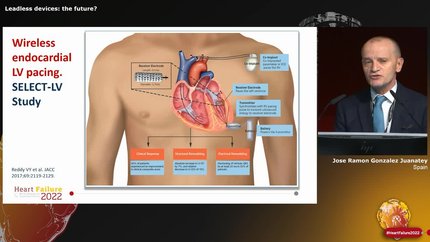
This randomized sub-study of the pivotal SOLVE-CRT trial demonstrates that leadless, ultrasound-based endocardial pacing for heart failure is feasible and efficacious showing evidence of left ventricular remodelling and electrical response after 6 months. WISE® CRT System Efficacy entire randomised population
Contributors

Elisabetta Montemerlo
Author
Giovanni Rovaris
Author
Jagmeet P Singh
Author
Christopher A Rinaldi
Author
Prashanthan Sanders
Author
Spencer H Kubo
Author
Simon James
Author
Imran K Niazi
Author
Tim R Betts
Author
Emad Aziz
Author
Mauro Biffi
Author
Amir Zaidi
Author
Jeffrey Alison
Author
Angelo Auricchio
Author
Michael R Gold
Author
JoAnn Lindenfeld
Author
Mary Norine Walsh
Author
Christian Butter
Author
You may be interested in