Improving atrial fibrillation or flutter detection and management by smartphone-based photoplethysmography rhythm monitoring following cardiac surgery: a pragmatic randomized trial
EP Europace Journal


Abstract
Atrial fibrillation (AF) and atrial flutter (AFL) after cardiac surgery are common and associated with adverse outcomes. The increased risk related to AF or AFL may extend beyond discharge. This study aims to determine whether photoplethysmography (PPG)-based smartphone monitoring to detect AF or AFL after hospital discharge following cardiac surgery improves AF management.
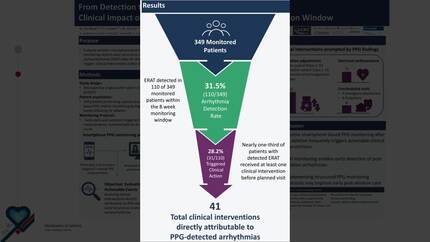
The intervention group performed 1 min rhythm checks three times daily using a smartphone-based PPG application during 6 weeks after hospitalization for cardiac surgery. The primary outcome involved AF management interventions by independent physicians, including initiation of oral anticoagulation (OAC), direct cardioversion, and up-titration or initiation of antiarrhythmic drugs. The study included 450 patients [mean (SD) age, 64.1 (9.2) years; 96 women (21.3%); 130 patients with AF history (28.9%); median (IQR) CHA2DS2-VASc score, 2 (1–3)], of whom 238 were randomized to PPG-based monitoring and 212 to usual care. AF/AFL was detected with PPG or electrocardiography in 44 patients (18.5%) in the monitoring group and 4 patients (1.9%) in the usual care group (OR 11.8; 95% CI, 4.2–33.3;
In unselected patients discharged home following cardiac surgery, PPG-based smartphone monitoring revealed significantly more AF/AFL which led to significantly more optimization of AF management.
Contributors


Marie Lamberigts
Author
Dieter Nuyens
Author
Hugo Van Herendael
Author
Inez Rodrigus
Author
Christiaan Van Kerrebroeck
Author
Henri Gruwez
Author
Nicolas De Melio
Author
Pieter Vandervoort
Author

Paulien Vermunicht
Author
Laurent Pison
Author
Leen Van Langenhoven
Author
Filip Rega
Author
You may be interested in