Acute heart failure due to fulminant eosinophilic myocarditis with mononeuritis: eosinophilic granulomatosis with polyangiitis requiring cardiac multimodality imaging and systemic evaluation: a case report
European Heart Journal - Case Reports


Abstract
Eosinophilic granulomatosis with polyangiitis (EGPA) is a systemic vasculitis that affects small-to-medium vessels of various organs and can lead to eosinophilic myocarditis, a rare but life-threatening condition. The diagnosis of EGPA is challenging due to overlapping features with other forms of vasculitis. Additionally, various clinical presentations of EGPA make its management complicated.
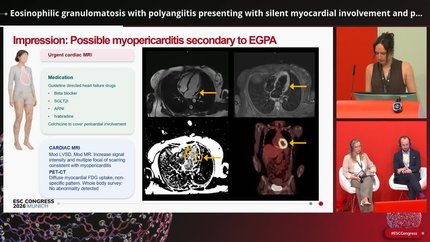
A 55-year-old man with a history of asthma presented with worsening chest pain. Peripheral hyper-eosinophilia, elevated troponin level, refractory pulseless ventricular tachycardia, and severe cardiac dysfunction suggested fulminant eosinophilic myocarditis. A multidisciplinary team comprising rheumatology, respirology, haematology, pathology, and cardiology specialists discussed the underlying cause of eosinophilia and diagnosed EGPA with the pathological findings of endomyocardial biopsy (EMB). Immunosuppressive therapy and optimal medical therapy for acute heart failure resulted in remission of myocarditis, as confirmed by follow-up echocardiography, cardiac magnetic resonance imaging, and EMB. Despite a good clinical course, mononeuritis rapidly worsened just before his discharge, requiring additional therapy. During the 2-year outpatient follow-up, the cardiac function remains well, and mononeuritis also improved.
The multidisciplinary approach facilitated prompt and accurate diagnosis and treatment, despite the disease’s diverse presentation, ultimately saving the patient’s life. This case highlights the importance of systemic evaluations in patients with EGPA, potentially affecting multiple organs, for monitoring disease status and guiding its treatment. This case report also emphasizes that close follow-up and careful monitoring with cardiac multimodality imaging are important to ensure optimal management of heart failure caused by EGPA myocarditis.
Contributors


Hiroki Matsuzoe
Author
Ryo Nishio
Author
Youhei Fujiki
Author
Kenichiro Otani
Author
Mayumi Inaba
Author
Hiroshi Takaishi
Author
Hidekazu Tanaka
Author
Giulia Elena Mandoli
Author
Vincenzo Nuzzi
Author
Duygu Kocyigit Burunkaya
Author
Sumit Sohal
Author
Sibghat Tul Llah
Author
You may be interested in