Cognitive and physical fatigue—the experience and consequences of ‘brain fog’ after spontaneous coronary artery dissection: a qualitative study
European Journal of Cardiovascular Nursing


Abstract
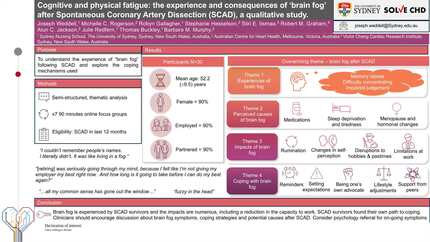
Brain fog and fatigue are common issues after acute coronary syndrome. However, little is known about the nature and impact of these experiences in spontaneous coronary artery dissection (SCAD) survivors. The aim of this study was to understand the experiences of brain fog and the coping strategies used after SCAD.
Participants were recruited from the Victor Chang Cardiac Research Institute Genetics Study database and considered eligible if their event occurred within 12 months. Seven semi-structured online focus groups were conducted between December and January 2021–22, with this study reporting findings related to brain fog and fatigue. Interviews were transcribed and thematically analysed using an iterative approach. Participants (
Brain fog is experienced by SCAD survivors, and the impacts are varied and numerous, including the capacity to work. Spontaneous coronary artery dissection survivors reported difficulty understanding causes and found their own path to coping. Recommendations for clinicians are provided.
Contributors


Michelle C Rogerson
Author
Robyn Gallagher
Author
Stephanie Hesselson
Author
Siiri E Iismaa
Author
Robert M Graham
Author

Thomas Buckley
Author
You may be interested in