Short- and long-term effects of beta-blockers on symptoms of anxiety and depression in patients with myocardial infarction and preserved left ventricular function: a pre-specified quality of life sub-study from the REDUCE-AMI trial
European Heart Journal - Acute CardioVascular Care


Abstract
Among patients with myocardial infarction (MI) with preserved left ventricular ejection fraction (LVEF), the REDUCE-AMI trial did not demonstrate a benefit of beta-blocker vs. no beta-blocker treatment on all-cause mortality and recurrent myocardial infarction. The aim of this pre-specified sub-study was to investigate effects of beta-blockers on self-reported symptoms of anxiety and depression.
In this parallel-group, open-label, registry-based randomized trial, assessments with the Hospital Anxiety and Depression Scale were obtained at hospitalization and two follow-up points (6–10 weeks and 12–14 months) after MI. Analyses were based on the intention-to-treat principle using linear mixed models, calculating both short- and long-term effects. From August 2018 through June 2022, 806 patients were enrolled. At baseline, 27% of patients were possible cases of anxiety (m, 5.6; SD, 3.9) and 14% were possible cases of depression (m, 3.9; SD, 3.2). Beta-blocker treatment had a negative effect on depressive symptoms at both follow-ups 1 (β = 0.48; 95% CI 09–0.86;
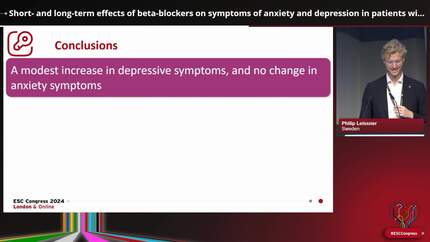
Beta-blocker treatment led to a modest increase in depressive symptoms among MI patients with preserved LVEF. This observed effect was most pronounced in individuals with prior beta-blocker treatment. In routine initiation and continuation of beta-blocker treatment, a risk of slightly increased depressive symptoms should be considered.
Contributors



Sophia Humphries
Author
Patric Karlström
Author
Troels Yndigegn
Author
Tomas Jernberg
Author

Claes Held
Author
You may be interested in