Secondary tricuspid regurgitation: incidence, types, and outcomes in atrial fibrillation vs. sinus rhythm
European Heart Journal


Abstract
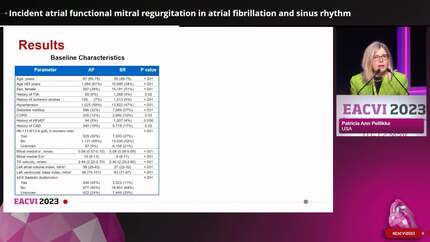
Incidence and types of secondary tricuspid regurgitation (TR) are not well defined in atrial fibrillation (AFib) and sinus rhythm (SR). Atrial secondary TR (A-STR) is associated with pre-existing AFib; however, close to 50% of patients with A-STR do not have AFib. The aim of this study was to assess incidence, types, and outcomes of ≥ moderate TR in AFib vs. SR.
Adults with and without new-onset AFib without structural heart disease or ≥ moderate TR at baseline were followed for the development of ≥ moderate TR. Tricuspid regurgitation types were pacemaker, left-sided valve disease, left ventricular (LV) dysfunction, pulmonary hypertension (PH), isolated ventricular, and A-STR.
Among 1359 patients with AFib and 20 438 in SR, 109 and 378 patients developed ≥ moderate TR, respectively. The individual types of TR occurred more frequently in AFib related to the higher pacemaker implantation rates (1.12 vs. 0.19 per 100 person-years,
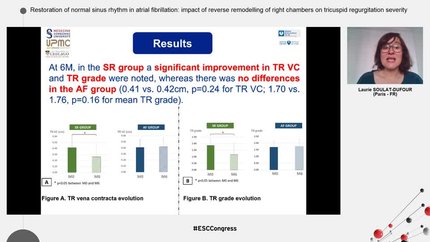
New-onset AFib vs. SR conferred a higher risk of the individual TR types related to sequelae of AFib and higher pacemaker implantation rates, although the distribution of TR types was similar. Secondary TR was universally associated with increased mortality.
Contributors


Matteo Castrichini
Author
Hossam H Ibrahim
Author
Christopher G Scott
Author
Grace Lin
Author
Eunjung Lee
Author
Rekha Mankad
Author
Konstantinos C Siontis
Author
Mackram F Eleid
Author

Hector I Michelena
Author

You may be interested in