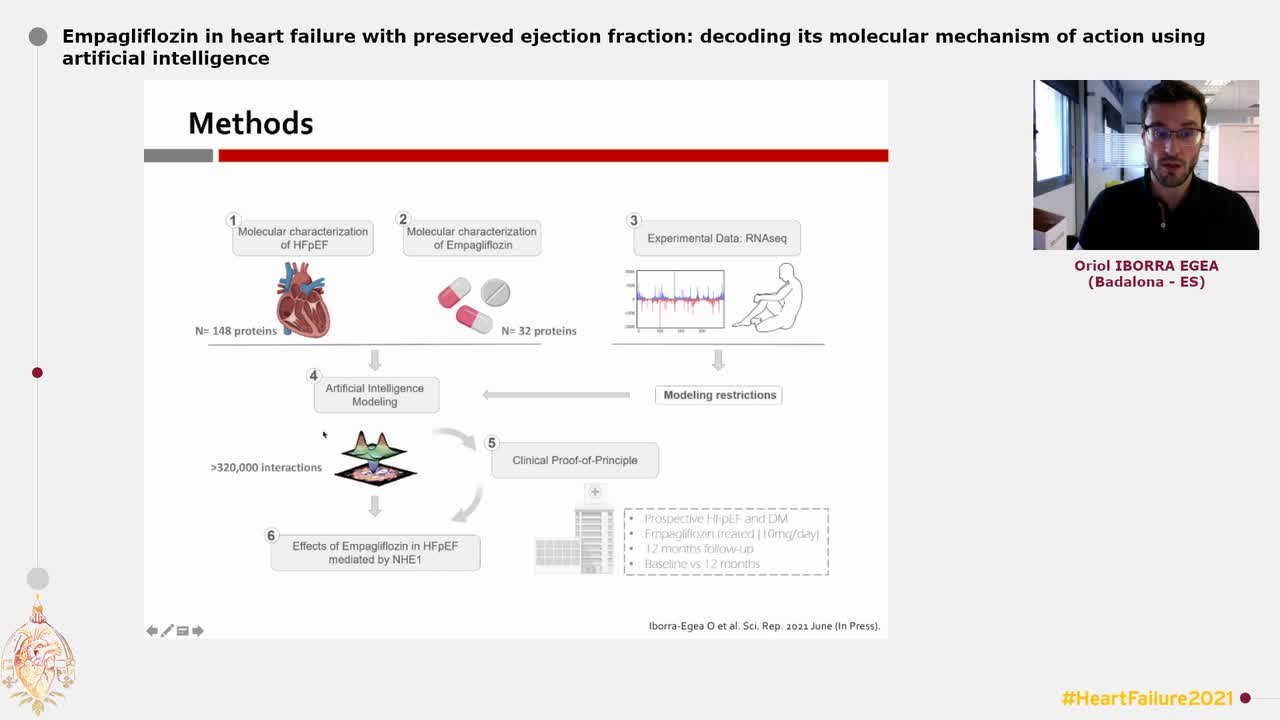
Empagliflozin inhibits increased Na influx in atrial cardiomyocytes of patients with HFpEF
Cardiovascular Research


Abstract
Heart failure with preserved ejection fraction (HFpEF) causes substantial morbidity and mortality. Importantly, atrial remodelling and atrial fibrillation are frequently observed in HFpEF. Sodium–glucose cotransporter 2 inhibitors (SGLT2i) have recently been shown to improve clinical outcomes in HFpEF, and post-hoc analyses suggest atrial anti-arrhythmic effects. We tested if isolated human atrial cardiomyocytes from patients with HFpEF exhibit an increased Na influx, which is known to cause atrial arrhythmias, and if that is responsive to treatment with the SGTL2i empagliflozin.
Cardiomyocytes were isolated from atrial biopsies of 124 patients (82 with HFpEF) undergoing elective cardiac surgery. Na influx was measured with the Na-dye Asante Natrium Green–2 AM (ANG-2). Compared to patients without heart failure (NF), Na influx was doubled in HFpEF patients (NF vs. HFpEF: 0.21 ± 0.02 vs. 0.38 ± 0.04 mmol/L/min (N = 7 vs. 18);
We show for the first time increased Na influx in human atrial cardiomyocytes from HFpEF patients, partly due to increased late INa and enhanced NHE1-mediated Na influx. Empagliflozin inhibits Na influx and late INa, which could contribute to anti-arrhythmic effects in patients with HFpEF.
Contributors

Elisa Schollmeier
Author


Kathrin Reuthner
Author
Silvia Heers
Author
Karoline Keller
Author
Maximilian Trum
Author
Johannes Riechel
Author
Michael Wester
Author
Susanne Klatt
Author
Nazha Hamdani
Author
Zdenek Provaznik
Author
Christof Schmid
Author

Michael Arzt
Author

You may be interested in