Staged hybrid ablation in left atrial appendage aneurysm a rare cause of refractory atrial tachyarrhythmia—a case report
European Heart Journal - Case Reports


Abstract
Left atrial appendage aneurysm (LAAA) is a rare cardiac anomaly, which can be congenital or acquired in origin. Because most cases are asymptomatic, it is typically diagnosed incidentally in the second to third decades of life. We present a case of a 28-year-old male with refractory atrial tachyarrhythmias and significantly reduced exercise tolerance. The informed consent was given by patient for this manuscript.
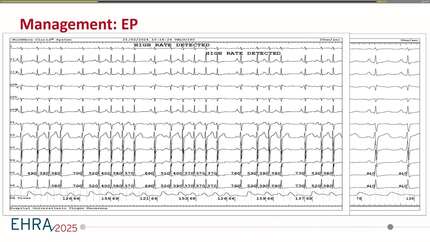
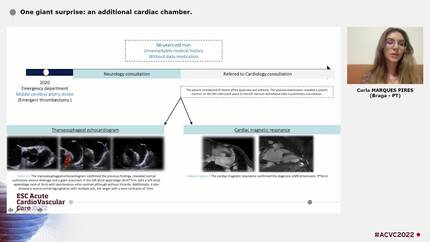
We present a case of a 28-year-old male with refractory atrial tachyarrhythmias and significantly reduced exercise tolerance after an episode of COVID respiratory infection. He was referred by primary care physician for management of atrial fibrillation (AF) with CHA2DS2Vasc score zero. He had documented AF and atrial flutter (AFL) resistant to both chemical and electrical cardioversions. Initial portable focused transthoracic echocardiography documented borderline reduced left ventricular ejection fraction in context of AFL. Electrophysiological study confirmed the diagnosis of typical AFL. Successful radiofrequency ablation of cavo-tricuspid isthmus resulted in bidirectional isthmus conduction block. However, patient developed AF, which was electrically cardioverted at the end of procedure. Patient was discharged on bisoprolol, ramipril, and apixaban, and outpatient cardiac MRI was organized to look for post-COVID myocardial scarring. Patient had recurrence of symptoms, and this time it was due to AF. Multimodal imaging led to discovery of LAAA, in which after discussion in multidisciplinary meeting, he was accepted for and managed with surgical resection of LAAA with concomitant Cox-Maze IV procedure. On 9 months post-operative follow up, patient is maintaining sinus rhythm and has completely returned to baseline activities.
A young patient with refractory atrial arrhythmia should be referred for multimodal cardiovascular imaging to rule out any structural heart disease. Left atrial appendage aneurysm is rare and can be managed conservatively, but surgical excision is most reported and appears to favour arrhythmia-free survival.
Contributors

Manoraj Navaratnarajah
Author
Stephen Harden
Author
Theodore Velissaris
Author
Paul R Roberts
Author
Jan Henzel
Author
Carlos Nicolas Perez-Garcia
Author
Stefano Bordignon
Author
Emmanouil Mantzouranis
Author
You may be interested in