Prognostic value of left ventricular mechanical dyssynchrony in left bundle branch block and preserved left ventricular ejection fraction patients
European Heart Journal - Cardiovascular Imaging


Abstract
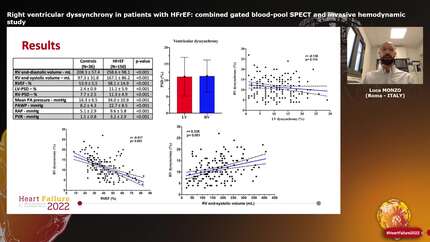
Patients with left bundle branch block (LBBB) patterns on the electrocardiogram and preserved left ventricular ejection fraction (LVEF) represent a heterogeneous group of patients with different prognosis, including patients with or without left ventricular mechanical dyssynchrony (LVMD). LVMD obtained by gated 99m-technetium single photon emission computed tomography (SPECT) imaging could be a useful tool to detect early myocardial damage, identifying a higher risk group of patients.
The aim of this study was to assess the prognostic value of LVMD in patients with LBBB and LVEF ≥ 50%.
Three hundred and seventy-seven consecutive patients with LBBB and LVEF ≥ 50% were referred for gated-SPECT from August 2011 to June 2019. Phase analysis parameters standard deviation (SD) and histogram bandwidth (HB) were obtained in rest gated SPECT imaging.
LVMD was defined when the HB and the SD exceeded the abnormality threshold values for men (SD ≥ a 24,39° y HB ≥ 62,39°) and women (SD≥ 22,1° y HB ≥ a 49.7) as derived from a normal database. (Threshold = mean plus two standard deviation for each parameter). (1)
Follow-up was performed by telephone contact or medical history review. Endpoint were the composite of all-cause death and myocardial infarction (MI). Logistic regression model and event-free survival curves were obtained. Univariate and multivariate cox regression analysis were performed.
Three hundred and sixty-four patients completed follow-up (median 106.08 months (58.08-176.12)). LVMD was observed in 84 (23%) patients. Fig. 1 shows the population clinical characteristics, perfusion and function results.
The composite of all-cause death and MI occurred in 12 patients (3.3%).
In the multivariate analysis models performed, the LVMD had an OR:8.32 (2.50-32.54, p 0.001) and age ≥ 70 an OR 5.43 (1.54-25.39, p 0.014) for the composite outcome.
Fig. 2 shows Kaplan-Meier curve of event-free survival in relation to LVMD and age ≥ 70 years.
The presence of LVMD was a predictor of high-risk of the composite outcome: adjusted hazard ratio: 7.10 (2.14-23.60; p 0.001), in the multivariate analysis adjusted for age ≥ 70 years.
In our population of patients with LBBB and LVEF ≥ 50%, the presence of LVMD assessed by rest gated SPECT imaging identifies patients with higher risk of adverse events adjusted for age ≥ 70 year.

You may be interested in