Management of edoxaban therapy in patients undergoing emergency/urgent procedures: a subanalysis of the global, prospective, observational, multinational EMIT-AF/VTE programme
EP Europace Journal


Abstract
Physicians are often unable to follow recommendations for preprocedural oral anticoagulant interruption before emergency/urgent (unplanned) procedures, which may lead to a higher incidence of adverse outcomes in these patients compared with those who undergo planned procedures. The Global EMIT-AF/VTE programme found low bleeding and thromboembolic event rates for patients receiving edoxaban who underwent diagnostic or therapeutic procedures. However, edoxaban management and clinical outcomes may differ among the subgroup of patients with emergency/urgent procedures.
To describe periprocedural edoxaban management and clinical outcomes for patients in the EMIT-AF/VTE programme who underwent emergency/urgent procedures.
In this subanalysis, only physician-reported unplanned (emergency/urgent) procedures were included, of which dental and dermatological procedures were excluded. Only a patient’s first emergency procedure was included, with the exception of 3 patients having 2 procedures on the same day (in these cases the 2 procedures were combined). Procedure bleeding risk was classified according to EHRA criteria, and baseline characteristics and edoxaban interruption data were collected. Clinical event and procedure dates were compared to determine whether they were related.
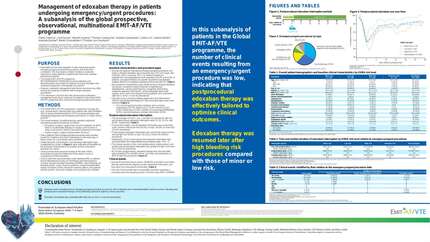
Among 156 patients undergoing emergency/urgent procedures, the mean ± standard deviation age at baseline was 74.5 ± 8.7 years, and the CHA2DS2-VASc score was 3.8 ± 1.6. Medical histories of hypertension and dyslipidaemia were reported in 84.0% and 40.4% of patients, respectively; approximately one-quarter of patients had diabetes mellitus (26.9%) or creatinine clearance ≤50 mL/min (24.4%). The most common procedure types were vascular access and transcatheter diagnostics/interventions (34.6%) and gastroenterological procedures (27.6%). Procedures were more often EHRA-classified as minor (35.9%) or low (35.3%) vs high risk (20.5%). Preprocedure edoxaban interruption rates ranged from 39.3%–50.9% across risk groups, with more than half of the procedures being performed with edoxaban interruption (53%–66%; Figure). By 20 days postprocedure, edoxaban therapy was resumed in approximately 86% and 88% of patients with minor- or low-risk procedures vs 70% with high-risk procedures. Overall, 33 clinical events were recorded, of which 18 (54.5%) preceded a procedure (Table). Five bleeding events and one thrombotic event occurred after and were caused by the procedure.
Edoxaban resumption was protracted after high- vs minor- or low-risk procedures. Bleeding and thrombotic events resulting from a procedure occurred in <4% of patients, indicating that postprocedure edoxaban therapy can be effectively tailored to optimise clinical outcomes. Table
Contributors

A Santamaria
Author
J Jin
Author
S Kohler
Author

J Souza
Author
M Saxena
Author
Barts and The London School of Medicine and Dentistry London , United Kingdom of Great Britain & Northern Ireland
T Vanassche
Author
You may be interested in