Sex differences at diagnosis and in one-year outcomes in patients with early atrial fibrillation
EP Europace Journal


Abstract
Little is known about differences in clinical phenotype between men and women with atrial fibrillation (AF). Our aim was to explore phenotypical sex differences at diagnosis and at one-year follow-up, in patients with early AF.
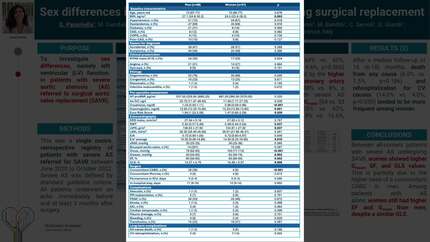
We used data from 5,469 participants of the DUTCH-AF registry; a nationwide prospective registry of patients with early AF or atrial flutter (diagnosis ≤ 6 months before inclusion) in the Netherlands, aged ≥ 18 years. We describe sex differences in clinical phenotype at diagnosis and at one-year follow-up, including the following outcomes: i) ischemic and bleeding events, ii) all-cause mortality, iii) AF-related hospital admissions, including ablation and cardioversion, and iv) AF progression patterns.
At inclusion, women were older than men (median 73 vs. 69 years, p<0.001), had more often paroxysmal AF (66% vs. 55%, p<0.001), and less often persistent AF (27% vs. 37%, p<0.001). They also had hypertension more often (59% vs. 53%, p<0.001), and less often vascular disease (12% vs. 21%, p<0.001, and reported more often symptoms at inclusion and in the month before follow-up; 56% vs. 46%, p<0.001, and 31% vs. 23%, p<0.001, respectively. Women underwent cardioversion and ablation procedures less often than men (14% vs. 21% p<0.001 and 3% vs. 5%, p<0.001, respectively). Moreover, for the combined rhythm control intervention cardioversion and ablation, women also underwent this rhythm control outcome less often than men (unadjusted odds ratio was 0.63 95% CI (0.55-0.73)), regardless of age, and the type of AF (i.e., paroxysmal or persistent AF) at inclusion (adjusted odds ratio 0.77 95% CI (0.62-0.92)). No differences were observed for ischemic and bleeding events, all-cause mortality, or AF progression patterns, but the number of these events was small.
Men and women with early AF differ in age, comorbidities, symptoms, and management. These findings are building blocks for individualized sex-specific AF care and research.
Contributors



You may be interested in