Recombinant human soluble domain of CD39L3 and ticagrelor: cardioprotective effects in experimental myocardial infarction
European Heart Journal


Abstract
The ecto–nucleoside triphosphate diphosphohydrolases of the CD39 family degrade ATP and ADP into AMP, which is converted into adenosine by the extracellular CD73/ecto-5-nucleotidase. This pathway has been explored in antithrombotic treatments but little in myocardial protection. We have investigated whether the administration of solCD39L3 (AZD3366) confers additional cardioprotection to that of ticagrelor alone in a pre-clinical model of myocardial infarction (MI).
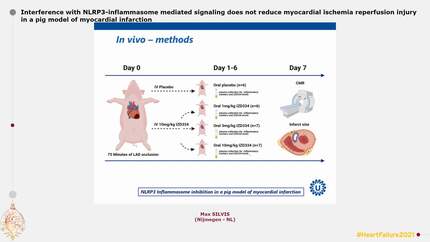
Ticagrelor-treated pigs underwent balloon-induced MI (90 min) and, before reperfusion, received intravenously either vehicle, 1 mg/kg AZD3366 or 3 mg/kg AZD3366. All animals received ticagrelor twice daily for 42 days. A non-treated MI group was run as a control. Serial cardiac magnetic resonance (baseline, Day 3 and Day 42 post-MI), light transmittance aggregometry, bleeding time, and histological and molecular analyses were performed.
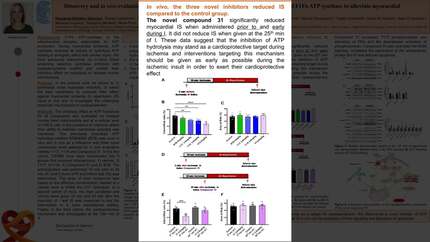
Ticagrelor reduced oedema formation and infarct size at Day 3 post-MI vs. controls. A 3 mg/kg AZD3366 provided an additional 45% reduction in oedema and infarct size compared with ticagrelor and a 70% reduction vs. controls (
Infusion of AZD3366 on top of ticagrelor leads to enhanced cardioprotection compared with ticagrelor alone.
Contributors


Monika Radike
Author
Pablo Sutelman
Author
Soumaya Ben-Aicha
Author
Manuel Gutiérrez
Author
Laura Casaní
Author
Daniel Hovdal
Author
Emily L Ongstad
Author
Anders Gabrielsen
Author
Alberto Hidalgo
Author
Ola Fjellström
Author
Leif Carlsson
Author

You may be interested in