Triglycerides revisited: is hypertriglyceridaemia a necessary therapeutic target in cardiovascular disease?
European Heart Journal - Cardiovascular Pharmacotherapy


Abstract
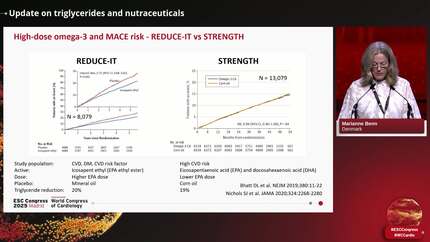
Despite the atherosclerotic cardiovascular disease (ASCVD) risk reduction achieved by low-density lipoprotein cholesterol (LDL-C) lowering therapy, residual ASCVD risk still exists. Previous epidemiological studies have suggested high plasma triglyceride (TG) levels as a risk factor or risk marker for ASCVD independent of LDL-C levels. In this review, we highlighted the underlying pathophysiology of hypertriglyceridaemia, the mechanistic action of therapeutic agents, the interpretation of conflicting results on recent clinical trials, and the present options for primary and secondary prevention. The benefits of fibrates-induced reduction in TG and increase in high-density lipoprotein cholesterol might outweigh the disadvantages of increasing LDL-C levels in primary prevention. In secondary CVD prevention, using eicosapentaenoic acid without docosahexaenoic acid, in addition to statins, will be beneficial. This comprehensive review may prove useful for the development of novel approaches that target hypertriglyceridaemia in future.
Contributors

Heinz Drexel
Author
Vorarlberg Institute for Vascular Investigation and Treatment Feldkirch , Austria

Juan Tamargo
Author

Juan Carlos Kaski
Author
St George's Hospital (London) London , United Kingdom of Great Britain & Northern Ireland
Basil S Lewis
Author
Christoph H Saely
Author
Peter Fraunberger
Author
Dobromir Dobrev
Author
Maki Komiyama
Author
Thomas Plattner
Author
Stefan Agewall
Author

You may be interested in