Biomarker-based prediction of fatal and non-fatal cardiovascular outcomes in individuals with diabetes mellitus
European Journal of Preventive Cardiology


Abstract
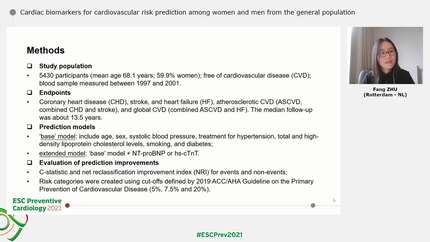
The role of biomarkers in predicting cardiovascular outcomes in high-risk individuals is not well established. We aimed to investigate benefits of adding biomarkers to cardiovascular risk assessment in individuals with and without diabetes.
We used individual-level data of 95 292 individuals of the European population harmonized in the Biomarker for Cardiovascular Risk Assessment across Europe consortium and investigated the prognostic ability of high-sensitivity cardiac troponin I (hs-cTnI),
Biomarkers improve cardiovascular risk prediction in individuals with and without diabetes and facilitate the identification of individuals with diabetes at highest risk for cardiovascular events.
Contributors


Alina Goßling
Author
Christina Magnussen
Author
Hermann Brenner
Author
Ben Schöttker
Author
Licia Iacoviello
Author
Simona Costanzo
Author
Frank Kee
Author

Allan Linneberg
Author
Chaterina Sujana
Author
Barbara Thorand
Author
Teemu J Niiranen
Author
Stefan Söderberg
Author
Henry Völzke
Author

Susana Sans
Author
Teresa Padró
Author
Stephan B Felix
Author
Matthias Nauck
Author
Astrid Petersmann
Author
Luigi Palmieri
Author
Chiara Donfrancesco
Author
Roberto De Ponti
Author
Marco M Ferrario
Author
Kari Kuulasmaa
Author
Tanja Zeller
Author
Francisco M Ojeda
Author
Stefan Blankenberg
Author

You may be interested in