Delivery of virtual acute cardiac care- a pilot study
European Journal of Cardiovascular Nursing


Abstract
Type of funding sources: None.
The increasing incidence of chronic conditions, along with the SARS CoV-2 pandemic, put unprecedented capacity restraints on hospital bed access. New models of care are required to meet the increasing clinical demand for hospital services. Digital health technologies to support virtual hospital in the home services may address this need by offering patient-centered, safe and efficient models of care that are not reliant on physical hospital infrastructure. Specific cardiac conditions are well suited to a virtual model of care.
To describe and evaluate a novel virtual model of care for cardiac patients that delivers early supported discharge from the acute inpatient ward to home.
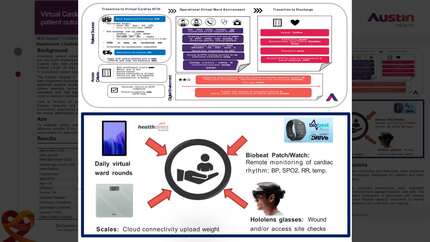
The cardiac hospital in the home (cHITH) model was designed to provide an early supported discharge in a virtual ward environment by an expert team of advanced practice cardiac nurses, pharmacists and cardiologists. This 48-hour model of care utilized wearable technology to monitor cardiac rhythm and vital signs in conjunction with daily virtual ward rounds to manage recognised post operative/ procedural complications. Escalation pathways for clinical deterioration were designed to support patient safety. Transitional care to discharge was a key element of this model. Quality, safety, efficiency and patient experience were evaluated.
From March-November 2022, 260 patients were referred to cHITH with 191 (74%) patients accepted according to the risk-stratification criteria. This cohort included post cardiac surgery (CSUR) patients (54%); post interventional procedures (31%), post device implant (6%) and other (9%). The cHITH length of stay (LOS) was 1.9 ± 0.1 days reflecting 20% of the episode of acute care delivered in the virtual environment. Re-admission rates were 9.4% at 30-days, with 0% mortality. Patient satisfaction was >90% (net promoter score).
The CSUR cohort (n=103) had a mean age of 62 ± 4 years; male 82%; isolated CABG 62%; 30-day re-admission rate 7.8%. Total post-operative LOS was 7.1 ± 2.4 days with 35% of post-operative care delivered in the virtual cHITH environment. A total of 258 bed days were realized.
This pilot virtual model of care has demonstrated safety, efficiency and high levels of patient satisfaction. Ongoing analysis is required to understand the broader applications of this model and to further evaluate quality, safety and efficiency metrics.
Contributors

You may be interested in