Age-stratified comparison of prognosis in cardiac resynchronization therapy with or without prophylactic defibrillator for nonischemic cardiomyopathy—a nationwide cohort study
EP Europace Journal


Abstract
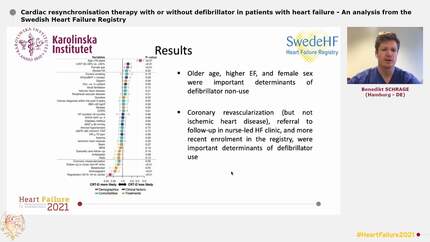
Prior studies have suggested that the benefit from primary preventive defibrillator treatment for patients with nonischemic cardiomyopathyy, treated with cardiac resynchronization therapy, may be age-dependent. We aimed to compare age-stratified mortality rates and mode of death in patients with nonischemic cardiomyopathy who are treated with either primary preventive cardiac resynchronization therapy with defibrillator (CRT-D) or CRT with pacemaker (CRT-P).
All patients with nonischemic cardiomyopathy and CRT-P or primary preventive CRT-D who were implanted in Sweden during the period 2005–2020 were included. Propensity scoring was used to create a matched cohort. Primary outcome was all-cause mortality within 5 years. In all, 4027 patients were included: 2334 with CRT-P and 1693 with CRT-D. Crude 5-year mortality was 635 (27%) vs. 246 (15%),
In this nationwide registry-based study, patients with CRT-D had better 5-year survival compared to patients with CRT-P. The interaction between age and mortality reduction was not consistent, but patients with CRT-D aged <60 years had the largest absolute mortality reduction.
Contributors

Maiwand Farouq
Author
Cecilia Rorsman
Author
Sofia Marinko
Author
David Mörtsell
Author
Uzma Chaudhry
Author
Lingwei Wang
Author


You may be interested in