Arrhythmogenic potential of myocardial disarray in hypertrophic cardiomyopathy: genetic basis, functional consequences and relation to sudden cardiac death
EP Europace Journal


Abstract
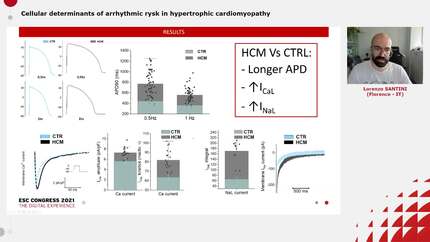
Myocardial disarray is defined as disorganized cardiomyocyte spatial distribution, with loss of physiological fibre alignment and orientation. Since the first pathological descriptions of hypertrophic cardiomyopathy (HCM), disarray appeared as a typical feature of this condition and sparked vivid debate regarding its specificity to the disease and clinical significance as a diagnostic marker and a risk factor for sudden death. Although much of the controversy surrounding its diagnostic value in HCM persists, it is increasingly recognized that myocardial disarray may be found in physiological contexts and in cardiac conditions different from HCM, raising the possibility that central focus should be placed on its quantity and distribution, rather than a mere presence. While further studies are needed to establish what amount of disarray should be considered as a hallmark of the disease, novel experimental approaches and emerging imaging techniques for the first time allow
Contributors

Gherardo Finocchiaro
Author
City St George's University of London London , United Kingdom of Great Britain & Northern Ireland

Nabeel Sheikh
Author
Ornella Leone
Author
Joe Westaby
Author
Francesco Mazzarotto
Author
Antonis Pantazis
Author
Cecilia Ferrantini
Author


Michael Papadakis
Author
City St George's University of London London , United Kingdom of Great Britain & Northern Ireland
Sanjay Sharma
Author
Mary N Sheppard
Author
Iacopo Olivotto
Author
You may be interested in