Percutaneous large-bore aspiration embolectomy with veno-arterial extracorporal membrane oxygenation support or standby in patients with high-risk pulmonary embolism and contraindications to thrombolysis: a preliminary single centre experience
European Heart Journal - Acute CardioVascular Care


Abstract
Large-bore catheter aspiration embolectomy reduces thrombus burden and right ventricle strain and improves haemodynamics after pulmonary embolism (PE). Sparse data are available for patients with high-risk PE and contraindications to thrombolysis or thrombolysis failure, particularly if veno-arterial extracorporal membrane oxygenation (VA-ECMO) is required.
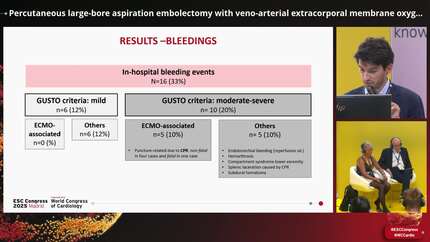
All patients with acute high-risk PE and contraindications to thrombolysis undergoing FlowTriever® percutaneous embolectomy and VA-ECMO circulatory support (or standby) at the University Hospital Zurich between April 2021 and August 2022 were retrospectively analysed. The primary outcome was the combination of recurrent PE, heart failure hospitalization, and all-cause death at 30 days. The analysis included 15 patients: mean age was 63.1 years and 14 (93%) were men. Overall, four (27%) patients presented with cardiac arrest, eight (53%) with ongoing obstructive shock, and three (20%) with persistent arterial hypotension. Veno-arterial extracorporal membrane oxygenation was implanted prior to aspiration embolectomy in eight (53%) patients. Three of seven patients without initial VA-ECMO support experienced periprocedural cardiac arrest, of whom two received ECMO support before completion of embolectomy. Veno-arterial extracorporal membrane oxygenation weaning was successful in all patients after a mean of 5.4 days. There was one periprocedural death in a patient who did not receive VA-ECMO support following a periprocedural cardiac arrest. The primary outcome at 30 days occurred in five (33.3%; 95% confidence interval 13.0–61.3%) patients.
This study provides preliminary evidence for the feasibility of percutaneous large-bore aspiration embolectomy in combination with VA-ECMO support (or standby) in patients with high-risk PE and contraindications to thrombolysis.
Contributors

Nils Kucher
Author
Ahmed Ouda
Author
Davide Voci
Author

Evy Micieli
Author
Mario Münger
Author
William Pleming
Author
Alexandru Grigorean
Author
Juri Sromicki
Author
Martin Oliver Schmiady
Author
Erik W Holy
Author
You may be interested in