Clinically guided pacemaker choice and setting: pacemaker expert programming study
EP Europace Journal


Abstract
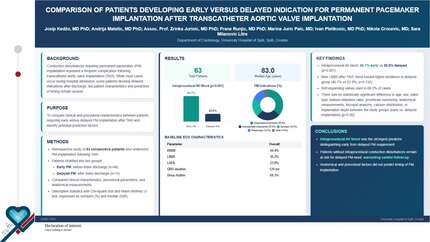
The aim of this multicentre, observational, transversal study was to evaluate pacemaker (PM) choice and setting in a large number of patients, in order to understand their relationship with the patients’ clinical characteristics.
The study enrolled a total of 1858 patients (71 ± 14 years, 54% male), consecutively evaluated during scheduled PM follow-up visits in 7 Italian cardiac arrhythmia centres. To evaluate the appropriateness of PM choice in relation to the patients’ clinical characteristics, we analysed their rhythm disorders at the time of device implantation and the characteristics of the devices implanted. To evaluate the appropriateness of device setting, current rhythm disorders and device setting at the time of enrolment were analysed. In the overall study population, 64.3% of the patients received a PM with all of the features required for their rhythm disorder [80.8% in persistent atrioventricular (AV) block, 76.5% in atrial fibrillation needing pacing, 71.0% in sinus node disease, 58.7% in non-persistent atrioventricular block (AVB), 52.7% in neuro-mediated syncope]. The most frequent cause of inappropriate PM choice was the lack of an algorithm to promote intrinsic AV conduction in non-persistent AVB patients (38.1%). In 76.2% of the patients with an appropriate PM (
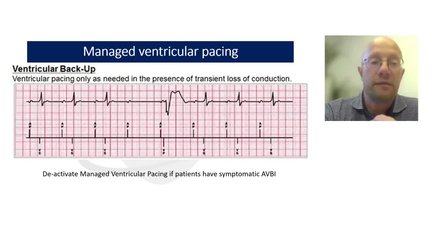
In the present ‘real-world’ registry, a large number of patients (35.7%) did not receive an optimal PM for their rhythm disorders. Moreover, one-fourth of appropriate PMs were not programmed according to the patients’ clinical characteristics.
Contributors


Pietro Palmisano
Author
Ernesto Ammendola
Author
Gabriele Dell'era
Author
Federico Guerra
Author
Stefano Aquilani
Author
Vittorio Aspromonte
Author
Giuseppe Boriani
Author
Michele Accogli
Author
Giuseppe Del Giorno
Author
Eraldo Occhetta
Author
Alessandro Capucci
Author
Renato Pietro Ricci
Author
Giampiero Maglia
Author
Mauro Biffi
Author
You may be interested in