Late primary angioplasty (beyond 12 h): are we sure it should be avoided?
European Heart Journal Supplements


Abstract
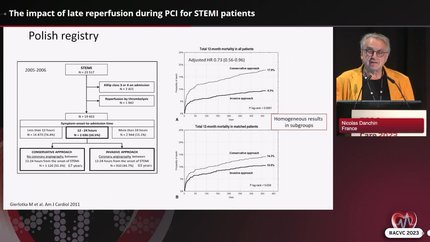
Optimal management for patients with ST-segment elevation myocardial infarction (STEMI) who arrive at a hospital late remains uncertain since evidence and real-world data are limited. Patients who present late with a STEMI are a heterogeneous population, and the clinical decision regarding percutaneous coronary intervention (PCI) should not be the same for all. One randomized clinical trial, multiple mechanistic studies, and contemporary registries suggest a presumed benefit for a prompt restoration of coronary flow even in late presenting STEMI. Crucial elements in decision-making are the presence of haemodynamic or electrical instability, and ongoing ischaemic signs or symptoms to tip the scales toward PCI. Among clinically stable, late-presenting patients, myocardial viability assessment and functional testing can identify yet another subgroup that may benefit from late PCI
Contributors

You may be interested in