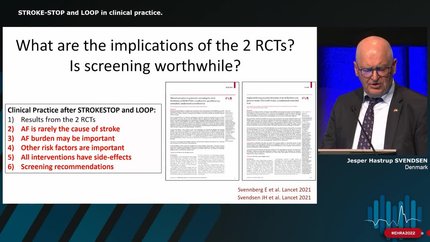
Stepwise mass screening for atrial fibrillation using N-terminal B-type natriuretic peptide: the STROKESTOP II study

EP Europace Journal

17 September 2019
Organised by: Logo
ESC Journals

Abstract

AbstractAims

To study the prevalence of unknown atrial fibrillation (AF) in a high-risk, 75/76-year-old, population using N-terminal B-type natriuretic peptide (NT-proBNP) and handheld electrocardiogram (ECG) recordings in a stepwise screening procedure.

Methods and results

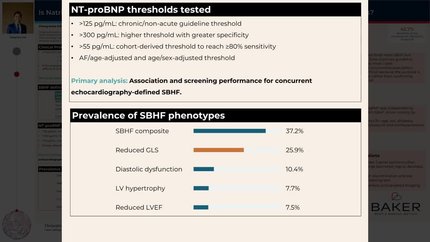
The STROKESTOP II study is a population-based cohort study in which all 75/76-year-old in the Stockholm region (n = 28 712) were randomized 1:1 to be invited to an AF screening programme or to serve as the control group. Participants without known AF had NT-proBNP analysed and were stratified into low-risk (NT-proBNP <125 ng/L) and high-risk (NT-proBNP ≥125 ng/L) groups. The high-risk group was offered extended ECG-screening, whereas the low-risk group performed only one single-lead ECG recording. In total, 6868 individuals accepted the screening invitation of which 6315 (91.9%) did not have previously known AF. New AF was detected in 2.6% [95% confidence interval (CI) 2.2–3.0] of all participants without previous AF. In the high-risk group (n = 3766/6315, 59.6%), AF was diagnosed in 4.4% (95% CI 3.7–5.1) of the participants. Out of these, 18% had AF on their index-ECG. In the low-risk group, one participant was diagnosed with AF on index-ECG. The screening procedure resulted in an increase in known prevalence from 8.1% to 10.5% among participants. Oral anticoagulant treatment was initiated in 94.5% of the participants with newly diagnosed AF.

Conclusion

N-terminal B-type natriuretic peptide-stratified systematic screening for AF identified 4.4% of the high-risk participants with new AF. Oral anticoagulant treatment initiation was well accepted in the group diagnosed with new AF.

Contributors

Katrin Kemp Gudmundsdottir

Author

Landspitali University Hospital Reykjavik , Iceland

ESC 365 is supported by