Prediction of the early response to spironolactone in resistant hypertension by the combination of matrix metalloproteinase-9 activity and arterial stiffness parameters
European Heart Journal - Cardiovascular Pharmacotherapy


Abstract
The aim of this study was to determine whether arterial stiffness assessed with the biochemical parameter active matrix metalloproteinase (MMP)-9 and the clinical parameters pulse pressure (PP) and pulse wave velocity predicts the response to spironolactone in resistant hypertension (RH).
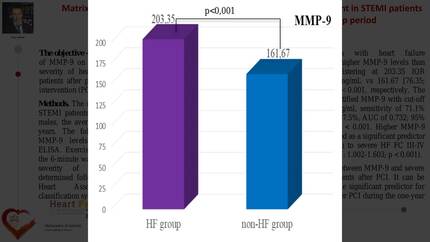
Ambulatory blood pressure (BP) and active MMP-9 (measured by zymography and ELISA) were measured at baseline, and patients were classified as having pseudo-RH or RH. Patients with RH received spironolactone and the response was determined after 8 weeks by ambulatory BP monitoring: those who achieved BP goals were considered controlled (CRH) and those who did not were considered uncontrolled (UCRH). Plasma active MMP-9 was significantly higher in patients with RH than with pseudo-RH, and correlated with 24
We propose active MMP-9 as a useful biomarker to identify patients with RH who will not respond to spironolactone. Combining MMP-9 activity with classical arterial stiffness parameters improves the prediction of the clinical response to spironolactone and might contribute to guide the most appropriate therapeutic decisions for patients with RH.
Contributors

Fernando de la Cuesta
Author
Gloria Alvarez-Llamas
Author
María G Barderas
Author
Julián Segura
Author


Elena Rodríguez-Sánchez
Author
David Geffen School of Medicine at UCLA Los Angeles , United States of America
José Alberto Navarro-García
Author
Jennifer Aceves-Ripoll
Author
Laura González-Lafuente
Author
Montserrat Baldan-Martin
Author
You may be interested in