Visual echocardiographic scoring system of the left ventricular filling pressure and outcomes of heart failure with preserved ejection fraction
European Heart Journal - Cardiovascular Imaging


Abstract
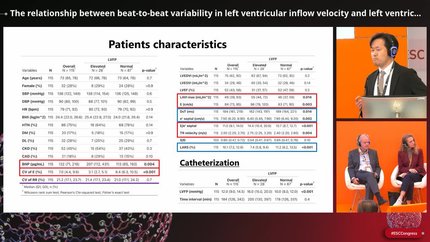
Elevated left ventricular filling pressure (LVFP) is a powerful indicator of worsening clinical outcomes in heart failure with preserved ejection fraction (HFpEF); however, detection of elevated LVFP is often challenging. This study aimed to determine the association between the newly proposed echocardiographic LVFP parameter, visually assessed time difference between the mitral valve and tricuspid valve opening (VMT) score, and clinical outcomes of HFpEF.
We retrospectively investigated 310 well-differentiated HFpEF patients in stable conditions. VMT was scored from 0 to 3 using two-dimensional echocardiographic images, and VMT ≥2 was regarded as a sign of elevated LVFP. The primary endpoint was a composite of cardiac death or heart failure hospitalization during the 2 years after the echocardiographic examination. In all patients, Kaplan–Meier curves showed that VMT ≥2 (
In patients with HFpEF, the VMT score was independently and incrementally associated with adverse clinical outcomes. Moreover, it could also predict clinical outcomes in HFpEF patients with AF.
Contributors


Masaru Obokata
Author
Tomonari Harada
Author
Kazunori Omote
Author
Kazuki Kagami
Author
Shingo Tsujinaga
Author
Yasuyuki Chiba
Author
Suguru Ishizaka
Author
Ko Motoi
Author
Yoji Tamaki
Author
Hiroyuki Aoyagi
Author
Masahiro Nakabachi
Author
Hisao Nishino
Author
Shinobu Yokoyama
Author
Asuka Tanemura
Author
Kazunori Okada
Author
Sanae Kaga
Author
Mutsumi Nishida
Author

Masahiko Kurabayashi
Author
Toshihisa Anzai
Author
You may be interested in