Optical coherence tomography-derived lipid core burden index and clinical outcomes: results from the CLIMA registry
European Heart Journal - Cardiovascular Imaging


Abstract
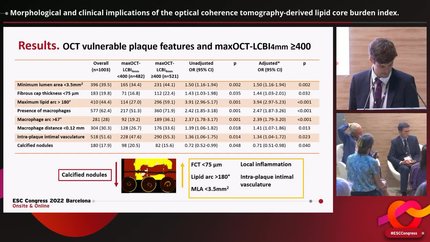
The aim of this study was to assess the morphological characteristics and prognostic implications of the optical coherence tomography (OCT)-derived lipid core burden index (LCBI).
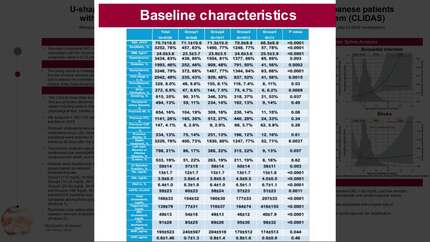
OCT-LCBI was assessed in 1003 patients with 1-year follow-up from the CLIMA multicentre registry using a validated software able to automatically obtain a maximum OCT-LCBI in 4 mm (maxOCT-LCBI4mm). Primary composite clinical endpoint included cardiac death, myocardial infarction, and target-vessel revascularization. A secondary analysis using clinical outcomes of CLIMA study was performed. Patients with a maxOCT-LCBI4mm ≥ 400 showed higher prevalence of fibrous cap thickness (FCT) <75 μm [odds ratio (OR) 1.43, 95% confidence interval (CI) 1.03–1.99;
A high maxOCT-LCBI4mm was related to poor outcome and vulnerable plaque features. This study represents a step further in the automated assessment of the coronary plaque risk profile.
Contributors

Flavio Giuseppe Biccirè
Author
Simone Budassi
Author
Yukio Ozaki
Author
Alberto Boi
Author

Riccardo Di Pietro
Author
Christos V Bourantas
Author
Valeria Marco
Author
Giulia Paoletti
Author
Caterina Debelak
Author
Emanuele Sammartini
Author
Francesco Versaci
Author
Franco Fabbiocchi
Author
Francesco Burzotta
Author
Daniele Pastori
Author
Filippo Crea
Author

Fernando Alfonso
Author
You may be interested in