Transvenous lead extraction in pediatric patients. Is it the same procedure in children as in adults?
European Heart Journal


Abstract
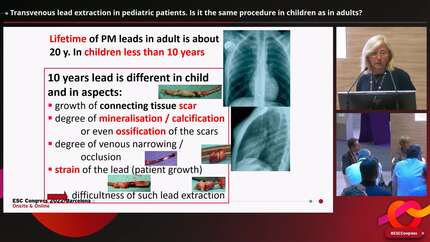
Fibrous tissue encapsulating the lead and causing venous occlusion makes lead removal more difficult.
This study sets out to define the differences in transvenous lead extraction (TLE) between pediatric and adult patients.
We report a retrospective review of prospectively collected data on lead extraction in 63 children aged ≤18 years and 2659 adults ≥40 years of age. The two groups were compared with respect to risk factors, procedure complexity, effectiveness, and complications.
The predominant systems were VVI in children and DDD in the adult group. Lead dysfunction and infection were the main indications for extraction in children and adults respectively. Risk factors: the number of leads extracted in one patient, multiple lead extraction and ICD leads were significantly more common in adults. The mean implant duration before TLE was longer in children (p=0.03). Dwell time of the oldest lead per patient and dwell time of the oldest extracted lead did not differ significantly. The duration (p=0.006) and mean extraction time per lead (p<0.001) were longer in children. Technical difficulties during TLE were more common in the pediatric group (p<0.001). Similarly, additional tools were more frequently used in children (p<0.001). Major complications were more common, albeit not significantly, in children. Complete radiographic and complete procedural success were significantly lower in the children's group (p<0.001).
TLE in children was frequently more complex, time consuming and arduous, and had lower procedural success. Lead removal in children is a different procedure than in adults.
Type of funding sources: None.
Table 1. Comparison of complexity of TLE procedur
Contributors

A Kutarski
Author
M Miszczak-Knecht
Author
M Brzezinska
Author
M Birbach
Author
A M Polewczyk
Author
W Jachec
Author
L Tulecki
Author
A Polewczyk
Author
K Tomkow
Author
P Stefanczyk
Author
D Nowosielecka
Author
K Bieganowska
Author
You may be interested in