Worldwide differences in primary prevention implantable cardioverter defibrillator utilization and outcomes in hypertrophic cardiomyopathy
European Heart Journal


Abstract
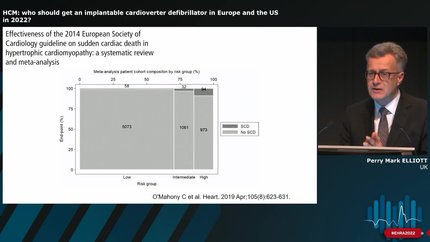
Risk stratification algorithms for sudden cardiac death (SCD) in hypertrophic cardiomyopathy (HCM) and regional differences in clinical practice have evolved over time. We sought to compare primary prevention implantable cardioverter defibrillator (ICD) implantation rates and associated clinical outcomes in US vs. non-US tertiary HCM centres within the international Sarcomeric Human Cardiomyopathy Registry.
We included patients with HCM enrolled from eight US sites (
Primary prevention ICDs are implanted more frequently in patients with HCM in US vs. non-US sites across the spectrum of SCD risk. There was a lower rate of appropriate ICD therapy in US sites, consistent with a lower-risk population, and no significant difference in SCD in US vs. non-US patients who did not receive an ICD. Further studies are needed to understand what drives malignant arrhythmias, optimize ICD allocation, and examine the impact of different ICD utilization strategies on long-term outcomes in HCM.
Contributors

Victor Nauffal
Author
Peter Marstrand
Author
Larry Han
Author
Victoria N Parikh
Author
Adam S Helms
Author

Daniel Jacoby
Author

Sunil Kapur
Author
Michelle Michels
Author
Anjali T Owens
Author
Euan A Ashley
Author
Alexandre C Pereira
Author
Joseph W Rossano
Author
Sara Saberi
Author
Christopher Semsarian
Author

James S Ware
Author
Imperial College London London , United Kingdom of Great Britain & Northern Ireland
Samuel G Wittekind
Author
Sharlene Day
Author

Carolyn Y Ho
Author
You may be interested in