Clinical features and survival in Takayasu’s arteritis-associated pulmonary hypertension: a nationwide study
European Heart Journal


Abstract
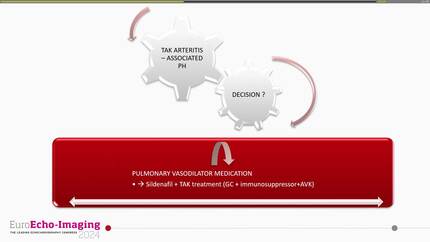
This study aimed to assess the clinical characteristics and long-term survival outcome in patients with Takayasu’s arteritis-associated pulmonary hypertension (TA-PH).
We conducted a nationally representative cohort study of TA-PH using data from the National Rare Diseases Registry System of China. Patients with pulmonary artery involvement who fulfilled the diagnostic criteria of Takayasu’s arteritis and pulmonary hypertension were included. The primary outcome was the time from diagnosis of TA-PH to the occurrence of all-cause death. Between January 2007 and January 2019, a total of 140 patients were included, with a mean age of 41.4 years at diagnosis, and a female predominance (81%). Patients with TA-PH had severely haemodynamic and functional impairments at diagnosis. Significant improvements have been found in N-terminal pro-B-type natriuretic peptide (NT-proBNP) and haemodynamic profiles in patients with TA-PH receiving drugs approved for pulmonary arterial hypertension. The overall 1-, 3-, and 5-year survival rates in TA-PH were 94.0%, 83.2%, and 77.2%, respectively. Predictors associated with an increased risk of all-cause death were syncope [adjusted hazard ratio (HR) 5.38 (95% confidence interval 1.77–16.34),
Patients with TA-PH were predominantly female and had severely compromised haemodynamics. More than 80% of patients in our cohort survived for at least 3 years. Medical treatment was based on investigators’ personal opinions, and no clear risk-to-benefit ratio can be derived from the presented data.
Contributors

Xin Jiang
Author
Yong-Jian Zhu
Author
Yu-Ping Zhou
Author
Fu-Hua Peng
Author
Lan Wang
Author
Wei Ma
Author
Yun-Shan Cao
Author
Xin Pan
Author
Gang-Cheng Zhang
Author
Feng Zhang
Author
Fen-Ling Fan
Author
Bing-Xiang Wu
Author
Wei Huang
Author
Zhen-Wen Yang
Author
Cheng Hong
Author
Meng-Tao Li
Author
Yi-Ning Wang
Author
Xi-Qi Xu
Author
Duo-Lao Wang
Author
Shu-Yang Zhang
Author

You may be interested in