The effect of intravenous ferric carboxymaltose on cardiac reverse remodelling following cardiac resynchronization therapy—the IRON-CRT trial
European Heart Journal


Abstract
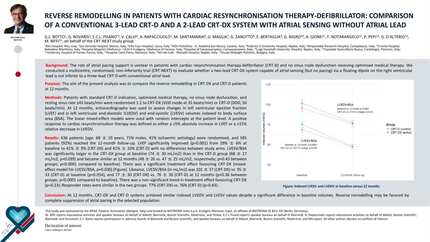
Iron deficiency is common in heart failure with reduced ejection fraction (HFrEF) and negatively affects cardiac function and structure. The study the effect of ferric carboxymaltose (FCM) on cardiac reverse remodelling and contractile status in HFrEF.
Symptomatic HFrEF patients with iron deficiency and a persistently reduced left ventricular ejection fraction (LVEF <45%) at least 6 months after cardiac resynchronization therapy (CRT) implant were prospectively randomized to FCM or standard of care (SOC) in a double-blind manner. The primary endpoint was the change in LVEF from baseline to 3-month follow-up assessed by three-dimensional echocardiography. Secondary endpoints included the change in left ventricular end-systolic (LVESV) and end-diastolic volume (LVEDV) from baseline to 3-month follow-up. Cardiac performance was evaluated by the force–frequency relationship as assessed by the slope change of the cardiac contractility index (CCI = systolic blood pressure/LVESV index) at 70, 90, and 110 beats of biventricular pacing. A total of 75 patients were randomized to FCM (
Treatment with FCM in HFrEF patients with iron deficiency and persistently reduced LVEF after CRT results in an improvement of cardiac function measured by LVEF, LVESV, and cardiac force–frequency relationship.
Contributors

Pieter Martens
Author
Matthias Dupont
Author

Petra Nijst
Author
Lieven Herbots
Author

Pieter Vandervoort
Author
Liesbeth Bruckers
Author
Wai Hong Wilson Tang
Author
Wilfried Mullens
Author
You may be interested in