Current progress in clinical, molecular, and genetic aspects of adult fibromuscular dysplasia
Cardiovascular Research


Abstract
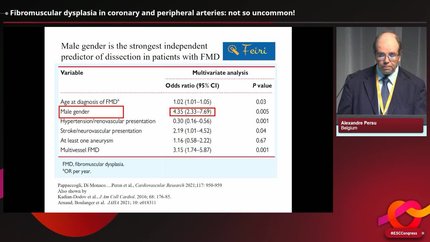
Fibromuscular dysplasia (FMD) is a non-atherosclerotic vascular disease that may involve medium-sized muscular arteries throughout the body. The majority of FMD patients are women. Although a variety of genetic, mechanical, and hormonal factors play a role in the pathogenesis of FMD, overall, its cause remains poorly understood. It is probable that the pathogenesis of FMD is linked to a combination of genetic and environmental factors. Extensive studies have correlated the arterial lesions of FMD to histopathological findings of arterial fibrosis, cellular hyperplasia, and distortion of the abnormal architecture of the arterial wall. More recently, the vascular phenotype of lesions associated with FMD has been expanded to include arterial aneurysms, dissections, and tortuosity. However, in the absence of a string-of-beads or focal stenosis, these lesions do not suffice to establish the diagnosis. While FMD most commonly involves renal and cerebrovascular arteries, involvement of most arteries throughout the body has been reported. Increasing evidence highlights that FMD is a systemic arterial disease and that subclinical alterations can be found in non-affected arterial segments. Recent significant progress in FMD-related research has led to improve our understanding of the disease’s clinical manifestations, natural history, epidemiology, and genetics. Ongoing work continues to focus on FMD genetics and proteomics, physiological effects of FMD on cardiovascular structure and function, and novel imaging modalities and blood-based biomarkers that can be used to identify subclinical FMD. It is also hoped that the next decade will bring the development of multi-centred and potentially international clinical trials to provide comparative effectiveness data to inform the optimal management of patients with FMD.
Contributors


Piotr Dobrowolski
Author
Heather L Gornik
Author
Jeffrey W Olin
Author

David Adlam
Author
University of Leicester Leicester , United Kingdom of Great Britain & Northern Ireland
Michel Azizi
Author
Pierre Boutouyrie
Author

Marion Boulanger
Author
Jean-Baptiste Demoulin
Author
Santhi K Ganesh
Author
Tomasz J. Guzik
Author
Magdalena Januszewicz
Author
Jason C Kovacic
Author
Mariusz Kruk
Author
Peter de Leeuw
Author

Marco Pappaccogli
Author
Melanie H A M Perik
Author
Emmanuel Touzé
Author
Patricia Van der Niepen
Author
Daan J L Van Twist
Author
Ewa Warchoł-Celińska
Author

Andrzej Januszewicz
Author
You may be interested in