JCAD/KIAA1462: biology, pathophysiology, and translational perspectives in vascular disease
Cardiovascular Research


Abstract
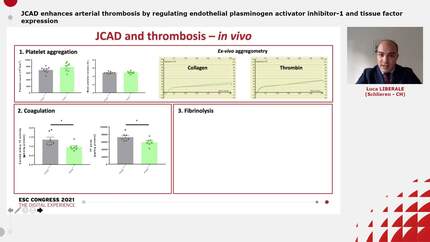
Junctional cadherin 5-associated protein (JCAD/KIAA1462) is an endothelial junctional protein encoded by a locus robustly associated with coronary artery disease and myocardial infarction in genome-wide association studies. Initially identified as a structural component of endothelial cell–cell junctions, JCAD has since emerged as a mechanosensor and regulator of key intracellular pathways (i.e. Hippo/YAP, PI3K/Akt, and mitogen-activated protein kinase/extracellular signal-regulated kinase) with functional consequences for endothelial homeostasis, inflammation, and vascular tone. In this review, we summarize the current understanding of JCAD biology, from its molecular features and pathway interactions to its experimental roles in atherosclerosis, arterial thrombosis, and ischaemic stroke. We further discuss emerging translational evidence suggesting circulating JCAD as an independent predictor of adverse cardiovascular events in patients with acute coronary syndromes, and its prognostic potential in ischaemic stroke. The review also addresses the expanding biology of JCAD within the cardiovascular system, hypothesizing links to conditions, such as hypertension, heart failure with preserved ejection fraction, and calcific aortic valve disease, as well as key limitations and therapeutic challenges. Overall, the available evidence highlights JCAD as a biologically plausible and potentially clinically relevant endothelial mediator, though independent validation and substantial mechanistic work remain necessary before its translational potential can be fully realized.
Contributors

Margherita Moriero
Author

Amedeo Tirandi
Author
Davide Di Vece
Author
Thomas F Luscher
Author
Federico Carbone
Author
Davide Ramoni
Author
Aldo Bonaventura
Author
Giovanni G Camici
Author
Stefano Ministrini
Author
Yifan Wang
Author

You may be interested in