Cardiac hydatidosis presenting as complete atrioventricular block: multimodality imaging diagnosis despite conflicting serology—a case report
European Heart Journal - Case Reports


Abstract
Cardiac echinococcosis accounts for fewer than 2% of
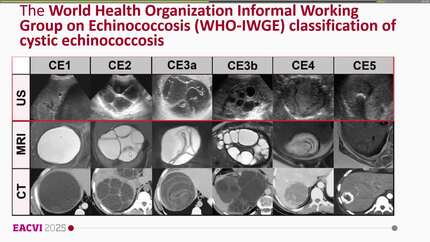
A 16-year-old man from Senegal presented shortly after arrival by sea with complete atrioventricular (AV) block and general deterioration. Echocardiography identified a cystic lesion with hyperechoic border and anechoic interior in the basal interventricular septum. Cardiac magnetic resonance demonstrated STIR hyperintensity and peripheral late gadolinium enhancement (LGE). Computed tomography (CT) confirmed a 3 × 1.6 cm calcified annular cyst in the septum, a second lesion (1.7 × 1.2 cm) in the AV pericardial recess, with no other extracardiac locations identified. Serological results were conflicting:
Multimodal imaging must take precedence over serology when results are absent or conflicting. The highly suggestive imaging pattern, calcified annular cyst, STIR hyperintensity, and peripheral LGE should not be dismissed in the presence of a misleadingly positive
Contributors

Diego Benjamín López Fazlic
Author
UNIVERSITY HOSPITAL NUESTRA SEÑORA DE LA CANDELARIA Santa Cruz de Tenerife , Spain

Alejandro Quijada Fumero
Author
Ana Laynez Carnicero
Author
Luca Vannini
Author
Felix Wiedmann
Author
Ugur Canpolat
Author
Jan Henzel
Author
Deepti Ranganathan
Author
You may be interested in