Cellular consequences of non-ablative radiotherapy: A novel approach to ventricular tachycardias
EP Europace Journal


Abstract
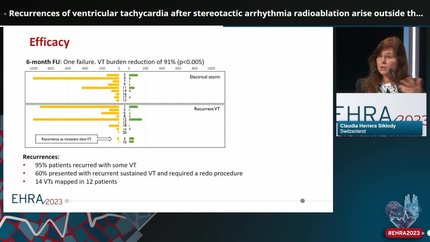
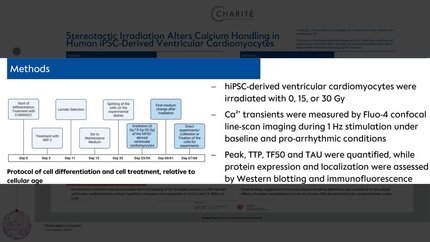
Radiotherapy (RT) with a single application of ionizing radiation [Stereotactic Arrhythmia Radioablation (STAR)] has been suggested as a non-invasive alternative to radiofrequency in ablating ventricular tachycardia (VT). Emerging data reveal that STAR may suppress VT without substrate destruction by enhancing impulse conduction instead, through increased expression of NaV1.5 channels and connexin 43. The study aims to investigate electrophysiology and intracellular Ca2+ dynamics in cardiomyocytes from mice subjected to
Cardiomyocytes isolated 2 weeks after RT with low-dose (15 Gy) or high-dose (25 Gy) were compared to those of sham-treated mice (CTRL). We evaluated: (i) the properties of the transient (
The results support the view that STAR may suppress VT by increasing conduction velocity, with APD prolongation providing an additional mechanism. On the other hand,
Contributors

Claudia Maniezzi
Author
Stefano Busti
Author
Angela S Maione
Author

Chiara Florindi
Author
Francesca Misitano
Author
Ilenia Anzaldi
Author
Francesco P Cammarata
Author
Giusi I Forte
Author
Roberto Catalano
Author
Gaetano M De Ferrari
Author
Francesco Lodola
Author

You may be interested in