The modified WHO class is associated with maternal complications in women with congenital heart disease
EHJ - Open


Abstract
With a growing population of women with congenital heart disease (CHD), pregnancies in this group are expected to increase. However, pregnancy in women with CHD is associated with increased adverse outcomes for both mother and child. The aim of this study was to evaluate pregnancy and foetal complications in women with CHD and to test their association with the modified WHO (mWHO) classification.
Using two national registers, the national register for CHD and the Pregnancy Register, primiparous women giving birth between 2014 and 2019 were identified. Women with CHD,
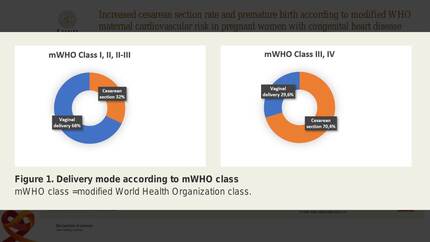
Pregnancy complications are more common in women with CHD. In women with CHD, the mWHO classification is associated with maternal complications and preterm birth. Thus, large national register data corroborate the advice provided in current guidelines, and the mWHO class is deemed a valuable risk stratification tool in women with CHD.
Contributors

Bengt Johansson
Author
Anna-Karin Wikström
Author
Jenny Alenius Dahlqvist
Author

Mikael Dellborg
Author
Ulf Thilén
Author
Inger Sundström-Poromaa
Author
Annika Bay
Author
Annette Schophuus Jensen
Author
You may be interested in