Anaemia, Iron Status, and Gender Predict the Outcome in Patients with Chronic Heart Failure
ESC Heart Failure


Abstract
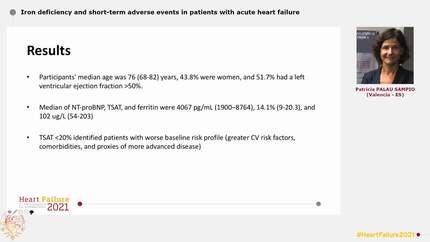
Anaemia and iron deficiency (ID) are frequently found in patients with chronic heart failure (CHF) and associated with adverse outcome. However, it is unclear whether absolute [transferrin saturation (TSAT) <20%, ferritin <100 μg/L] or inflammation-driven functional ID (TSAT <20%, ferritin >100 μg/L) with and without anaemia had similar or different consequences for such patients.
Within this retrospective cohort study, 2223 patients (1601 men and 622 women) with CHF, referred to our department, between 2000 and 2018, were followed for a median time of 84 months. Anaemia was found in 393 patients and was an independent predictor for an adverse outcome [HR 2.164 (95% CI 1.865–2.512),
Anaemia and low tissue iron availability as reflected by TSAT <20% are negative predictors of outcome in patients with CHF. Systemic inflammation, renal function, BMI, age, and gender are important contributors for the clinical course.
Contributors


You may be interested in