

A 55-year-old male asymptomatic endurance athlete with obstructive coronary disease: To stent or not to stent?

23 March 2020
Organised by: Logo
Practice Tools Open Access Test your knowledge

A 55-year-old male who is a competitive cyclist and runner presents for assessment after undergoing a screening exercise stress test (EST) done on the request of the patient following the recent sports-related sudden cardiac death (SrSCD) of a training partner.

His exercise stress test demonstrated:

  • A high fitness capacity (18.7 METS)
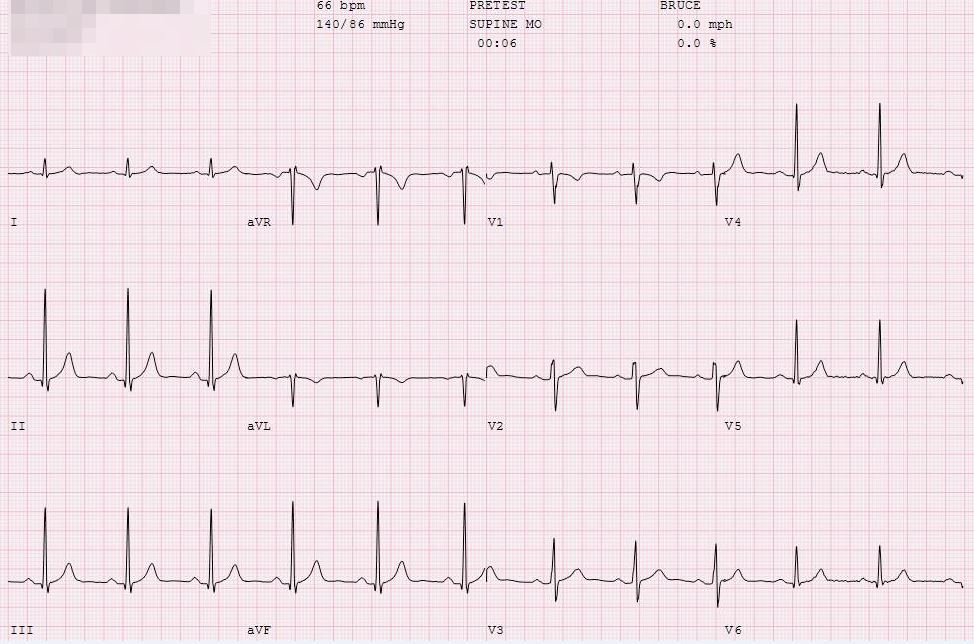
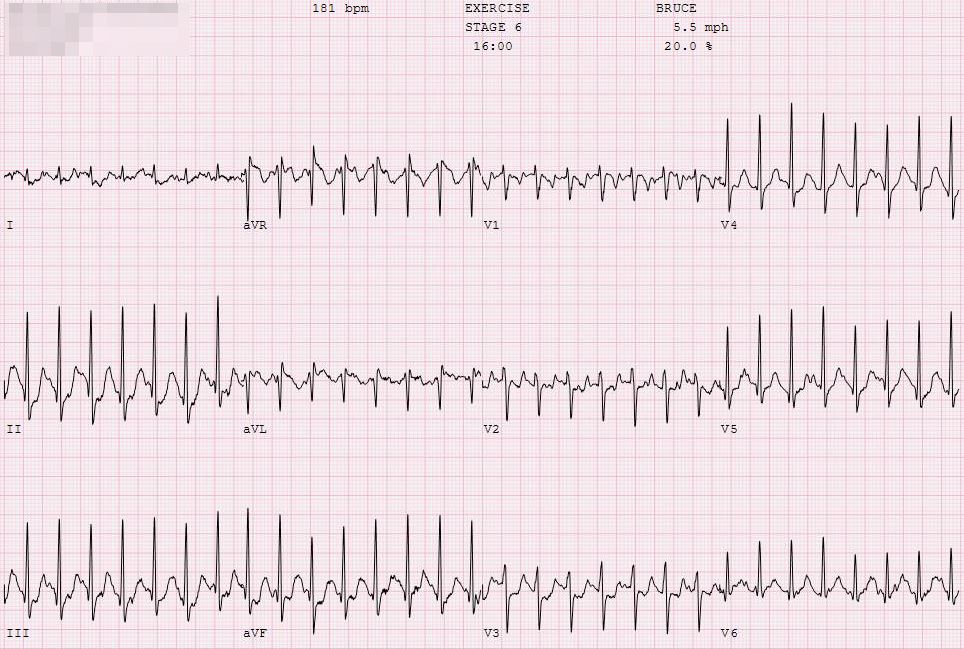
  • A normal resting electrocardiogram (Image 1) but was electrically positive with >1mm of downsloping ST-depression in the anterior leads (Image 2), in addition to demonstrating a hypertensive response to exercise

In addition:

  • He experiences no angina or anginal equivalents
  • He has no past medical history or significant family history, takes no regular medications
  • He is a lifelong non-smoker
  • He has a normal resting blood pressure.

Given his EST findings, baseline bloodwork is ordered to assess his cardiovascular risk profile and a coronary CT angiogram (CCTA) is arranged. His total cholesterol is 6.93mmol/L, his LDL is 4.4mmol/L, his HDL is 1.25mmol/L, and his HbA1c is 5.4%. His SCORE is 2%.

His CCTA demonstrates a 70% lesion in his proximal left circumflex artery and a densely calcified proximal and mid left anterior descending artery unable to be quantified due to the severity of calcification.

The management of asymptomatic masters athletes diagnosed with obstructive coronary artery disease (CAD) and demonstratable ischaemia remains a clinical dilemma. The European Association of Preventive Cardiology (EAPC) guidelines recommend revascularization if ischaemia is present, however the evidence underpinning this recommendation is limited. When obstructive CAD is discovered in middle-aged athletes who exercise at high-intensities (and frequently push their ischaemic thresholds), should more aggressive revascularization strategies truly be pursued in addition to optimal medical therapy (OMT) versus OMT alone or is revascularization an unnecessary added risk?

Image 1: Exercise Stress Test pre-PCI

2020-sports-cardiology-case11-image1.jpg


Image 2: Exercise Stress Test pre-PCI

2020-sports-cardiology-case11-image2.jpg

Notes to editor

Author information
James McKinney MD, MSca,b; Nathaniel Moulson MDa,b, Barbara N. Morrison MSca; Jobanjit S. Phulka BHSca; Phillip YeungBSca; Saul Isserow MB Ch.Ba,b; David A. Wood MDa,b
Author Affiliations:
SportsCardiologyBC, University of British Columbia, Vancouver, British Columbia, Canadaa
Division of Cardiology, University of British Columbia, Vancouver, British Columbia, Canadab


Contributors

ESC 365 is supported by

