
66 year-old male with exertional dyspnoea

19 February 2015
Organised by: Logo
Practice Tools Open Access Test your knowledge

The case

Description

  • This male patient (66 years, BMI 25 kg/m2, current smoker) has a history of bilateral pulmonary embolism in June 2013 which was treated with EKOS-lysis (ultrasound-enhanced thrombolysis). He is currently under oral anticoagulation.
  • During work-up, coronary artery disease (CAD) with a high-degree right coronary artery stenosis was detected. A percutaneous coronary intervention (PCI) was performed in July 2013. Left ventricular ejection fraction was slightly reduced (50%).
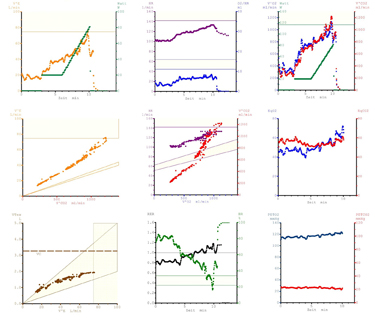
  • This is the cardiopulmonary exercise testing (CPX) 9 panel plot at the beginning of a 3-month ambulatory cardiac rehabilitation program. The patient complained of persisting exertional dyspnoe NYHA III, but no chest pain, dizziness or syncope.
  • Pulmonary function test (PFT) was performed: Forced Vital Capacity (FVC): 3.0 L (71% predicted); Forced Expiratory Volume in 1 second (FEV1): 2.6 L (79% predicted). FEV1/FVC ratio 85%.

Test findings

  • The 9-plot analysis documented a reduced exercise capacity with 81 Watt (51% predicted), and a peak VO2 of 1130 ml/min, 14.0 ml/min/kg (55% predicted) (Panel 3).
  • The O2 pulse (VO2/heart rate) (Panel 2) and the VO2/work rate slope (Panel 3) were reduced.
  • The VE/VCO2 slope was markedly elevated with a value of 50 (Panel 4).
  • Breathing reserve (1- ratio of ventilation at maximal exercise to maximal voluntary ventilation) was 0.18 (Panel 8).
  • PETCO2 was low at rest (23 mmHg) and did not increase during exercise (Panel 9).
  • Blood pressure was 115/70 mmHg at rest and 120/80 mmHg at maximum exercise. SpO2 was not recorded due to a technical problem. Exercise ECG revealed no exercise-induced ischemia.

cpx-case-feb2015_escardio-hPhotoMedium.jpg


References

Notes to editor

Dr. Matthias Wilhelm, MD, FESC, Dept. of Cardiology, University Hospital of Bern, Switzerland

Contributors

ESC 365 is supported by