
Doctor Peizhi Wang
Peking Union Medical College Hospital, Beijing (China)
Membership:
ESC Professional Member
Biography
Peizhi Wang, MD, completed his PhD training at Fuwai Hospital, Peking Union Medical College, China, and as a joint PhD student under the supervision of Professor Thomas Lüscher and Dr. Florian Wenzl at the Center for Molecular Cardiology, University of Zurich, Switzerland, where he continues as a visiting scholar. Currently, he is a postdoctoral researcher in the Peking Union Medical College Hospital, China. His research focuses on risk stratification, artificial intelligence, and multiomics novel biomarkers.

Contributor content
Presentation
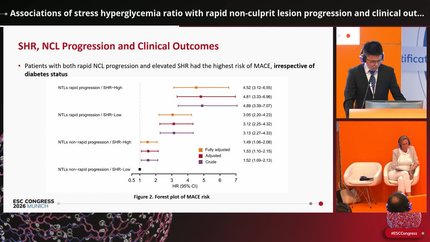
Associations of stress hyperglycemia ratio with rapid non-culprit lesion progression and clinical outcomes in acute coronary syndrome: a multicenter cohort study according to diabetes status

Presentation
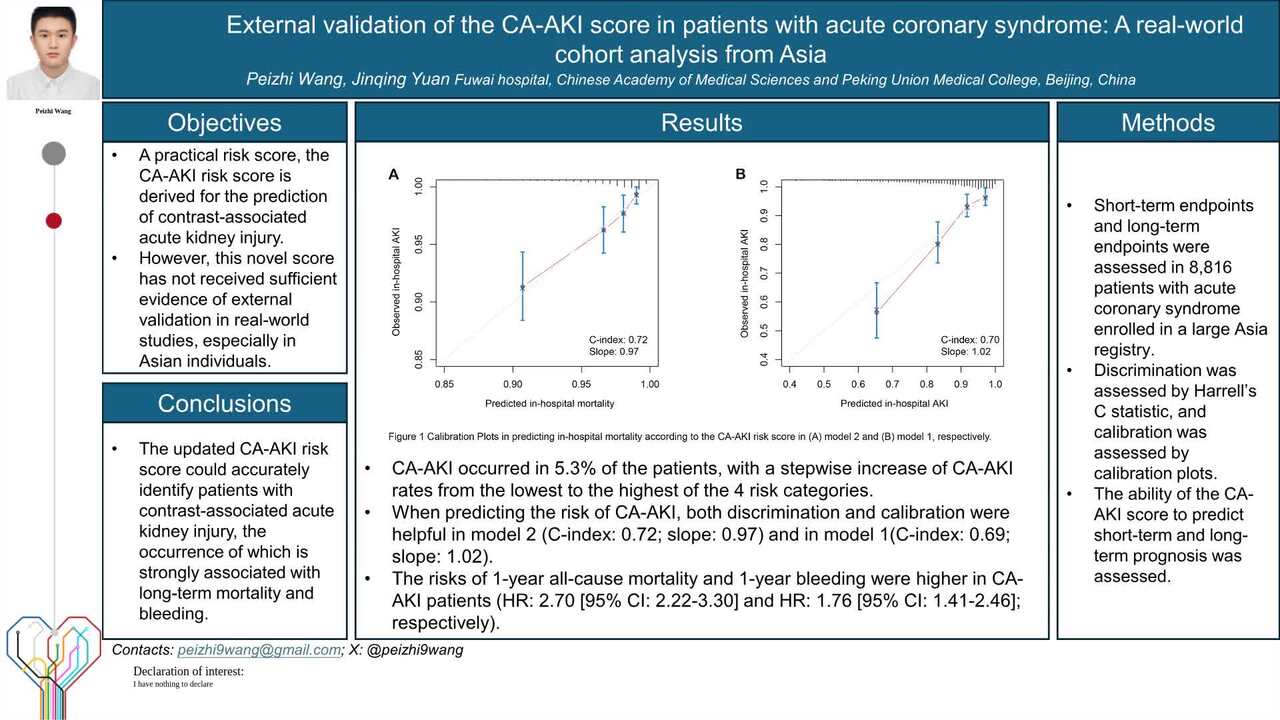
External validation of the CA-AKI score in patients with acute coronary syndrome: A real-world cohort analysis from Asia
Presentation
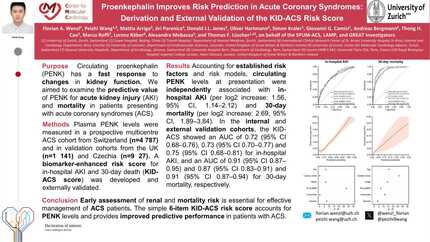
Proenkephalin improves risk prediction in acute coronary syndromes: derivation and external validation of the KID-ACS risk score

Presentation
L-shaped association of lipoprotein(a) on long-term bleeding risk in patients with coronary heart disease: insight from a multicenter cohort in Asia

Presentation
The impact of the high-density lipoprotein cholesterol levels on long-term poor prognosis in patients with acute coronary syndrome: observations from a multicenter Asian cohort study

Presentation
Effect of the stress hyperglycemia ratio on long-term outcome in older patients with coronary heart disease: a multicenter cohort study
Presentation

