
Professor Aram Chilingaryan
Yerevan Medical Scientific Center, Yerevan (Armenia)
Membership:
FESC Member
EACVI Member
Follow
Biography
Aram Chilingaryan, MD, PhD
Date of birth 17 August, 1967
Graduated Yerevan State Medical University in 1990
Fellowship in cardiology in Institute of Cardiology, Yerevan in 1990-1992
Fellowship in cardiology in College of Physicians and Surgeons at Columbia University, New York, NY, in 1998
Fellowship in Echocardiography in National Institute of Health, Yerevan, Armenia in 2010
PHD in 1999
Doctor of Medical Science in 2011
Current practice 1. Cardiologist and Scientific director of Myocardial infarction department at the Institute of Cardiology, Yerevan
Lecturer ат the Chair of Cardiology at тче Yerevan State Medical University
Council of Internal Diseases at Yerevan State Medical University since 2015
e mail: aramchil@gmail.com
Fellow of ESC since 2022

Contributor content
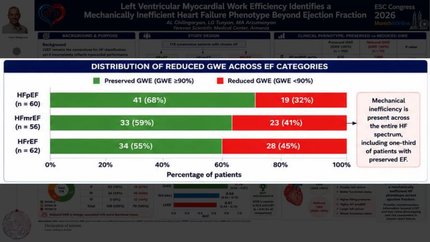
Presentation
Left ventricular myocardial work efficiency identifies a mechanically inefficient heart failure phenotype across ejection fraction

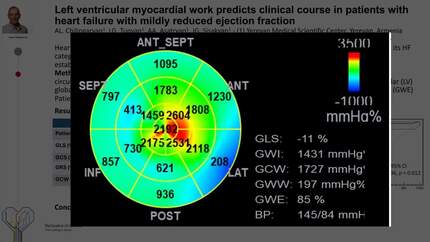
Presentation
Left ventricular myocardial work predicts clinical course in patients with heart failure with mildly reduced ejection fraction
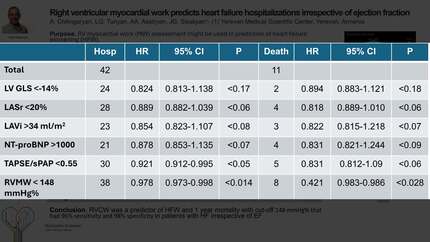
Presentation
Right ventricular myocardial work predicts heart failure hospitalizations irrespective of ejection fraction

Presentation
Global constructive myocardial work predicts reduction of ejection fraction in patients with heart failure with preserved ejection fraction

Presentation
Differences in left ventricular twisting and different strains in patients with heart failure with preserved ejection fraction versus patients with arterial hypertension.

Presentation
Area strain predicts clinical course in patients with heart failure with midrange ejection fraction

Presentation
Global constructive myocardial work predicts left ventricular disfunction onset beyond longitudinal strain in patients with significant primary mitral regurgitation.

Presentation
Global constructive work and left atrial reservoir function is reduced in patients with heart failure with preserved ejection fraction compared with patients with preclinical diastolic dysfunction.

Presentation
Exercise induced reduction in myocardial work predicts significant coronary artery disease in patients with false negative stress echocardiography.

Presentation

