
Doctor Dean Nachman
Hadassah - Hebrew University Medical Center Jerusalem, Jerusalem (Israel)
Membership:
ESC Professional Member
HFA Member
Follow
Biography
Dr. Dean Nachman received his MD degree from the Faculty of Medicine at the Hebrew University of Jerusalem, Israel, in 2010, graduating Suma Cum-Laude. He earned his specialty in Internal Medicine and Cardiology at Hadassah Medical Center. His scientific work focuses on the bio-convergence field, implementing engineering concepts in basic and translational research, from animal model studies to clinical trials, seeking remedies for unmet needs arising from his clinical experience. His main areas of clinical and scientific interest are heart failure and advanced hemodynamic monitoring, and he has established several research collaborations with renowned scientists. His research has been published in peer-reviewed papers and presented at national and international conferences, receiving several prestigious research grants. Since 2022 he leads the CV Technology Innovation Center comprised of a team of mechanical engineer, data scientists, MSc and MD students a lab manager and CV fellows.

Contributor content
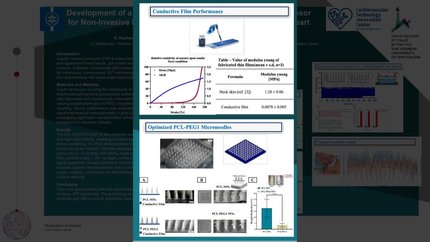
Presentation
Development of a flexible conductive microneedle-based sensor for non-invasive monitoring of jugular venous pressure in heart failure patients

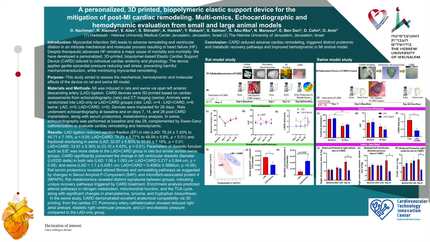
Presentation
A personalized, 3D printed, biopolymeric elastic support device for the mitigation of post-MI cardiac remodeling: multi-omics, echocardiographic and hemodynamic evaluation from small and large animal
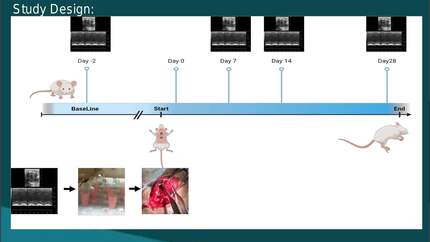
Presentation
A personalized, 3D printed, polymeric elastic support device for the prevention of post-MI cardiac remodeling
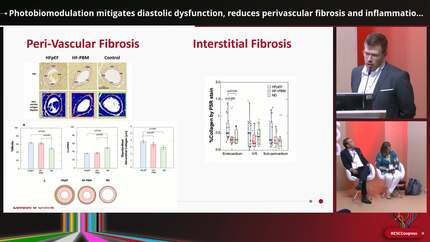
Presentation
Photobiomodulation mitigates diastolic dysfunction, reduces perivascular fibrosis and inflammation, and enhances mitochondrial metabolism and angiogenesis in a mouse model of HFpEF

Presentation
Patients with hypertension or chronic kidney disease demonstrated reduced diurnal variation in advanced hemodynamic parameters
Presentation
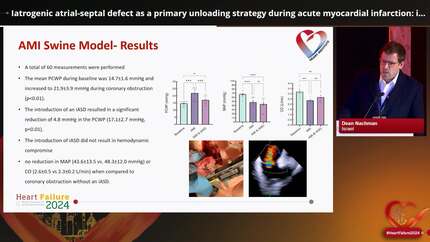
Iatrogenic atrial-septal defect as a primary unloading strategy during acute myocardial infarction: insights from patients data based computational hemodynamic and a swine models
Presentation
Photobiomodulation attenuates myocardial fibrosis and diastolic dysfunction in a mouse model of heart-failure with preserved ejection fraction

Presentation
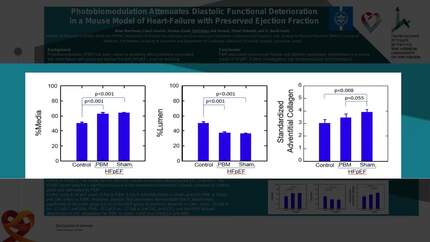
Photobiomodulation attenuates diastolic functional deterioration in a mouse model of heart-failure with preserved ejection fraction

Presentation
Continuous monitoring of advanced hemodynamic parameters during hemodialysis demonstrated early variations in patients experiencing intradialytic hypotension

Presentation

