
Doctor Luise Roehrich
Charite University Hospital, Berlin (Germany)
Membership:
HFA Member
Follow
Biography
Dr. Luise Roehrich has been pursuing a career in heart failure medicine at the Deutsches Herzzentrum der Charité since 2017. Her clinical and scientific interests focus on advanced heart failure, mechanical circulatory support, heart transplantation, and echocardiography. Her doctoral thesis compared different frailty assessment methods in advanced heart failure patients and was funded by the Kaltenbach Doctoral Scholarship of the Deutsche Herzstiftung e.V. In 2023 she received the DIVI/Philips research award for “Patient safety on the intensive care unit” for a validation trial to establish an automated early warning system that uses a machine learning based, real time biomarker to detect postoperative bleeding after cardiothoracic surgery. She now develops an large language model-based automated heart failure alert for non cardiology wards. Clinically, she manages patients in the advanced heart failure unit, including those receiving mechanical circulatory support or transplantation.

Contributor content
Presentation
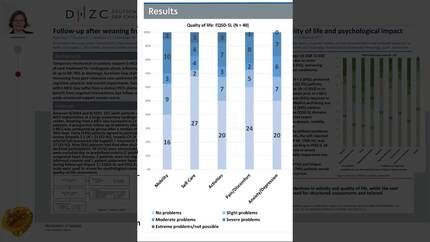
Follow-up after weaning from temporary mechanical circulatory support: quality of life and psychological impact

Presentation
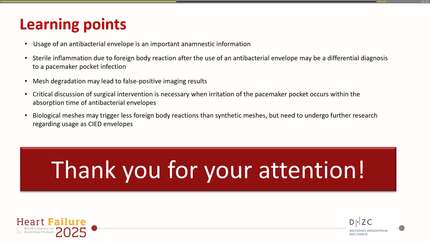
Foreign body reaction mimicking a pacemaker pocket infection after use of an absorbable antibacterial envelope

Presentation
Correlation of endorgan function and bioimpedance measurement in patients with advanced heart failure

Presentation

