
Doctor Aurore Lyon
Cardiovascular Research Institute Maastricht (CARIM), Maastricht (Netherlands (The))
Biography
Dr Aurore Lyon graduated from Telecom ParisTech Engineering School in Paris (France) with a Master in Engineering, and from the University of Oxford (UK) with a Master in Computer Science. She obtained her PhD in the Computational Cardiovascular Science group (University of Oxford). Her PhD focussed on using computational techniques for analysis, modelling and simulation of ECG signals for patient risk stratification in hypertrophic cardiomyopathy. Since April 2018, she has been working at Maastricht University. Her current research focusses on cardiac electromechanics and the coupling from cellular electrophysiology to whole-heart mechanics and hemodynamics. Specific projects of research include electromechanical modelling, effect of exercise on cardiac pathologies such as ARVC or deformation imaging analysis in atrial fibrillation patients. Her interests lie in combining computer simulations with clinical data to better understand cardiac physiology or disease mechanisms.

Contributor content
Presentation
Computational modeling identifies the cellular electromechanical effects of disrupted intracellular calcium handling in arrhythmogenic cardiomyopathy patients


Presentation
Computational modeling identifies the cellular electromechanical effects of disrupted intracellular calcium handling in arrhythmogenic cardiomyopathy patients
Presentation
Presentation
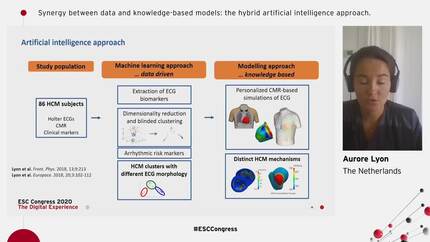
Synergy between data and knowledge-based models: the hybrid artificial intelligence approach.

Presentation
Irregular beat-to-beat hemodynamic properties determine left ventricular function during atrial fibrillation
Presentation
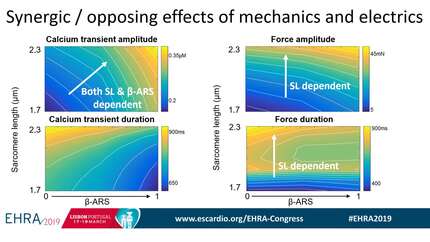
Differentiating the exercise-induced effects of acute beta-adrenergic stimulation and stretch on calcium and force dynamics using a novel electromechanical cardiomyocyte model
Presentation
Presentation

