
Associate Professor Masateru Takigawa
University Hospital of Bordeaux, Bordeaux (France)
Membership:
ESC Professional Member
EHRA Member
Biography
Masateru Takigawa, MD, PhD, is a Junior Associate Professor in the Department of Cardiovascular Medicine and the Division of Advanced Arrhythmia Research at Institute of Science Tokyo, where he has served since 2024. He received his MD from Kobe University and his PhD in cardiology from Institute of Science Tokyo, followed by a second PhD in bioimaging from the University of Bordeaux. His clinical and research interests include catheter ablation of atrial and ventricular arrhythmias, pulsed field ablation, high-power short-duration radiofrequency ablation, electrophysiological mapping, and lesion assessment. He also engaged in translational research related to new technologies. Since 2026, he has chaired the European Section of the International Exchange Committee of the Japanese Heart Rhythm Society. He has contributed to international consensus recommendations on the management of atrial tachycardia.

Contributor content

Presentation
Ethanol infusion to the vein of Marshall combined with anatomical and electrophysiological substrate modification improves long-term outcomes in very long-standing atrial fibrillation

Presentation
Optimizing pace-and-ablate: structural determinants of transmural lesion formation in atrial ablation
Presentation
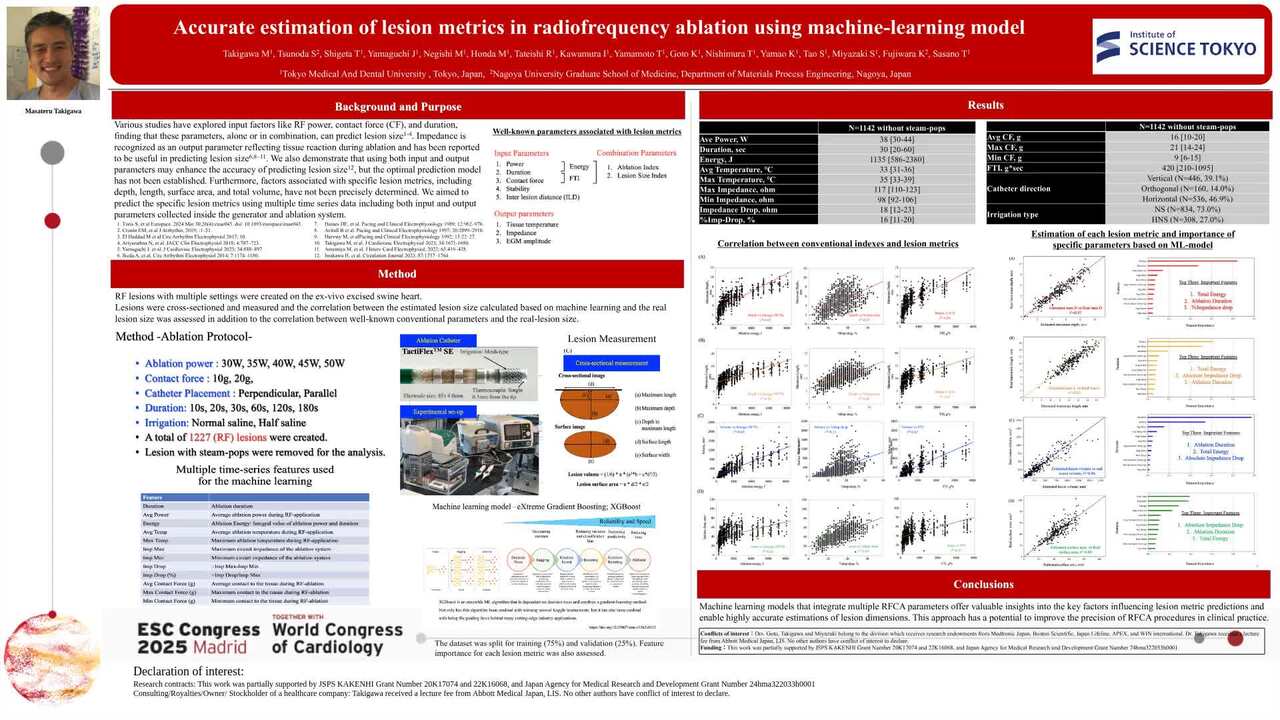
Accurate estimation of lesion metrics in radiofrequency ablation using machine-learning model
Presentation
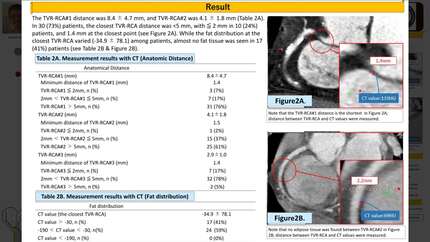
Risk of right coronary artery injury and distance from tricuspid valve ring to right coronary artery in radiofrequency ablation.

Presentation
Presentation
Mechanism of the recurrence after ablation for post-AF AT: Lessons from the comparison between the index vs. second procedure for organized atrial tachycardias observed after AF ablation.

Presentation
Presentation
Relationship between wall thickness and post-infarction VT mechanisms: insights from registered CT imaging and ultra-high density VT mapping using the Rhythmia system.
Presentation
Precise circuit of dual-loop reenry and the characteristics of common isthmus in post AF ablation left atrial tachycardia
Presentation

