
Doctor Amir Askarinejad
Institute of Life Course and Medical Sciences, Liverpool (United Kingdom of Great Britain & Northern Ireland)
Biography
Dr. Askarinejad is a medical doctor and researcher interested in research in cardiac electrophysiology and atrial fibrillation. From 2023 to 2025, he worked in the Electrophysiology Department at Rajaie Cardiovascular Research Center in Tehran, Iran, where he researched on clinical and translational cardiovascular research projects with a focus on cardiovascular arrhythmia. In January 2025, he joined the Liverpool Centre for Cardiovascular Science as an Honorary Research Associate. He now works on three large atrial fibrillation registries: IRAD, APHRS, and EORP. He goes to the gym and plays chess in his spare time.

Contributor content
Presentation
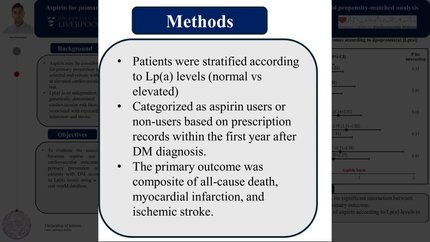
Aspirin for primary prevention in patients with diabetes according to lipoprotein(a) levels: a real-world propensity-matched analysis

Presentation
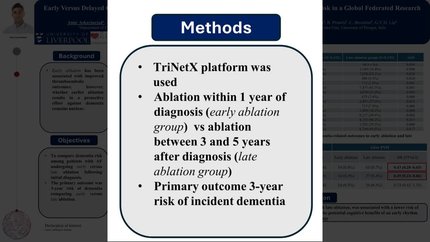
Early versus delayed catheter ablation in patients with atrial fibrillation: impact on dementia risk using a global federated network
Presentation
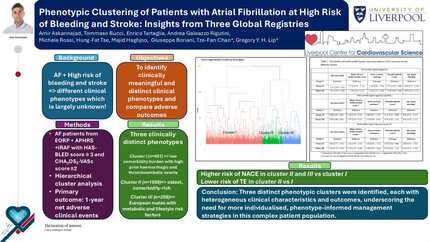
Phenotypic clustering of patients with atrial fibrillation at high risk of bleeding and stroke: insights from three global registries
Presentation
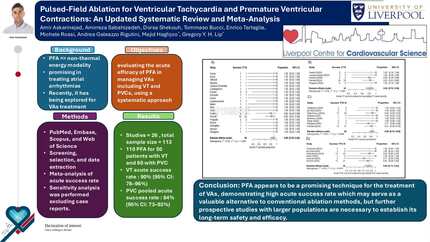
Pulsed-field ablation for ventricular tachycardia and premature ventricular contractions: an updated systematic review and meta-analysis

Presentation
Optimal blanking period following atrial fibrillation catheter ablation: a systematic review and diagnostic meta-analysis of over 28,000 patients
Presentation
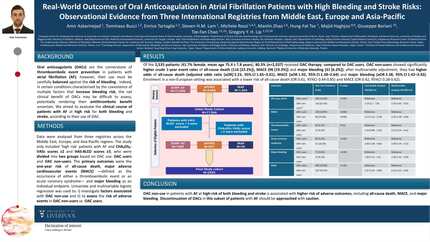
Real-world outcomes of oral anticoagulation in atrial fibrillation patients with high bleeding and stroke risks: evidence from three international registries from Middle East, Europe and Asia-Pacific
Presentation

