Lipoprotein(a): From Evidence to Clinical Action

Knowledge Track

6 May 2026

Lp(a) is one of the few remaining independent cardiovascular risk factors with no approved targeted therapy, and one that is not yet systematically measured in routine clinical practice. It persists as a driver of cardiovascular events regardless of other risk factors, yet most individuals with elevated Lp(a) remain unaware of their levels.

This Knowledge Track presents key evidence structured around the five clinical decisions that define Lp(a) management today: establishing the causal case, interpreting results in practice, identifying who to test, acting within current options, and preparing for the therapies now in late-stage development, with each decision connecting evidence directly to clinical application. 

Supported by Novartis. Content selected and curated independently by ESC.

START HERE - Track Introduction
Lp(a) is a genetically determined lipid particle and an independent driver of cardiovascular risk, one that persists even in patients whose other lipid targets are well controlled. Before entering the structured learning path, these three resources provide the clinical, epidemiological, and guideline context that underpins every section that follows.
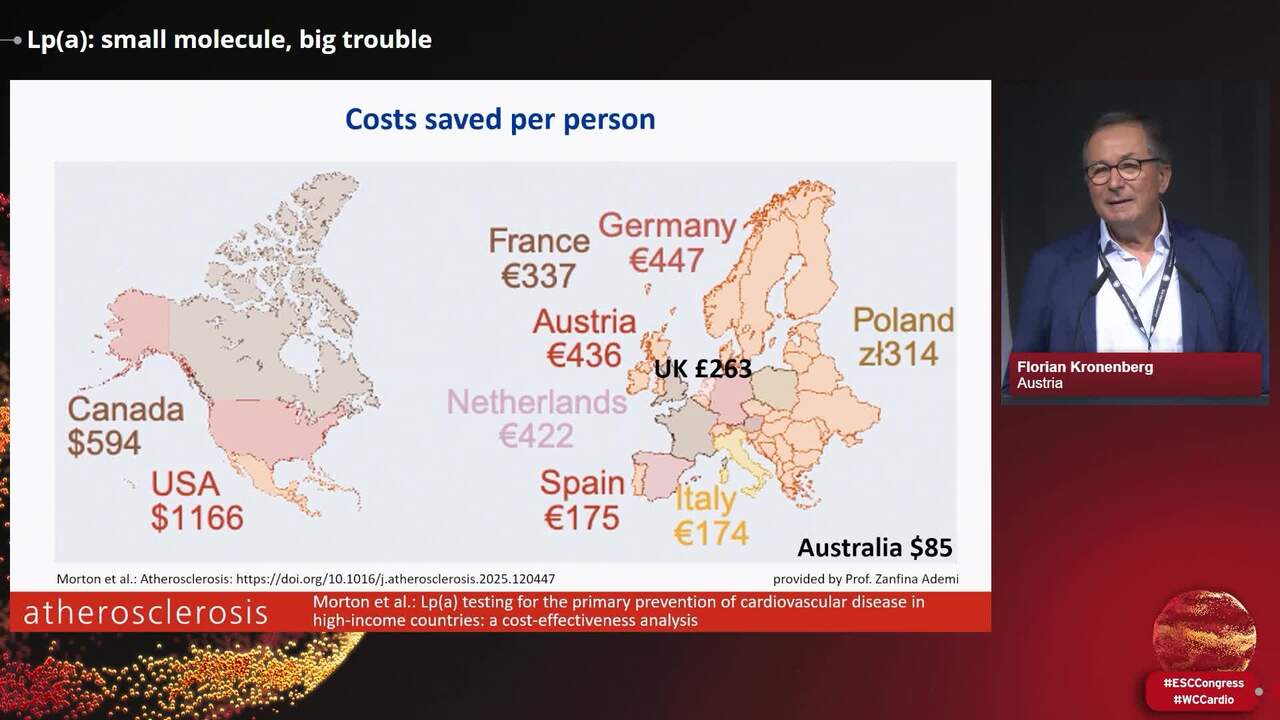
Lp(a): small molecule, big trouble
Congress Presentation
Lp(a): small molecule, big trouble

30 August 2025 Core evidence: Foundational studies and guideline-level recommendations
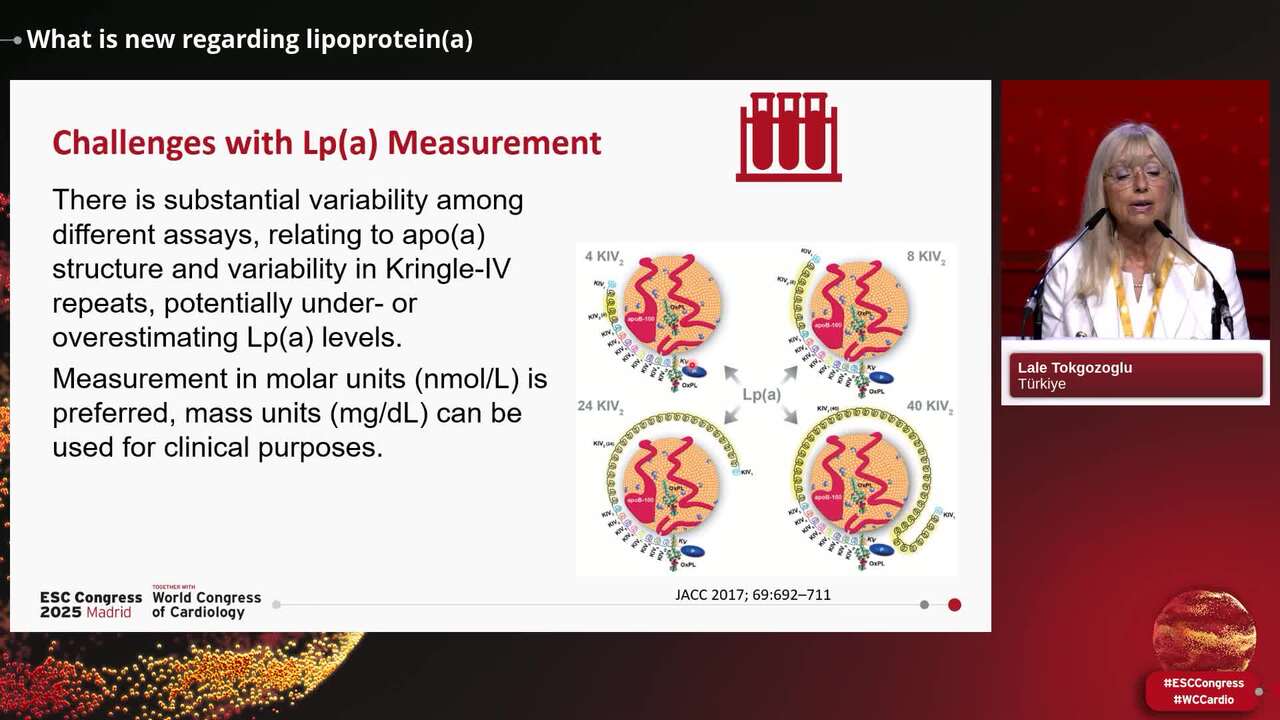
What is new regarding lipoprotein(a)
Congress Presentation
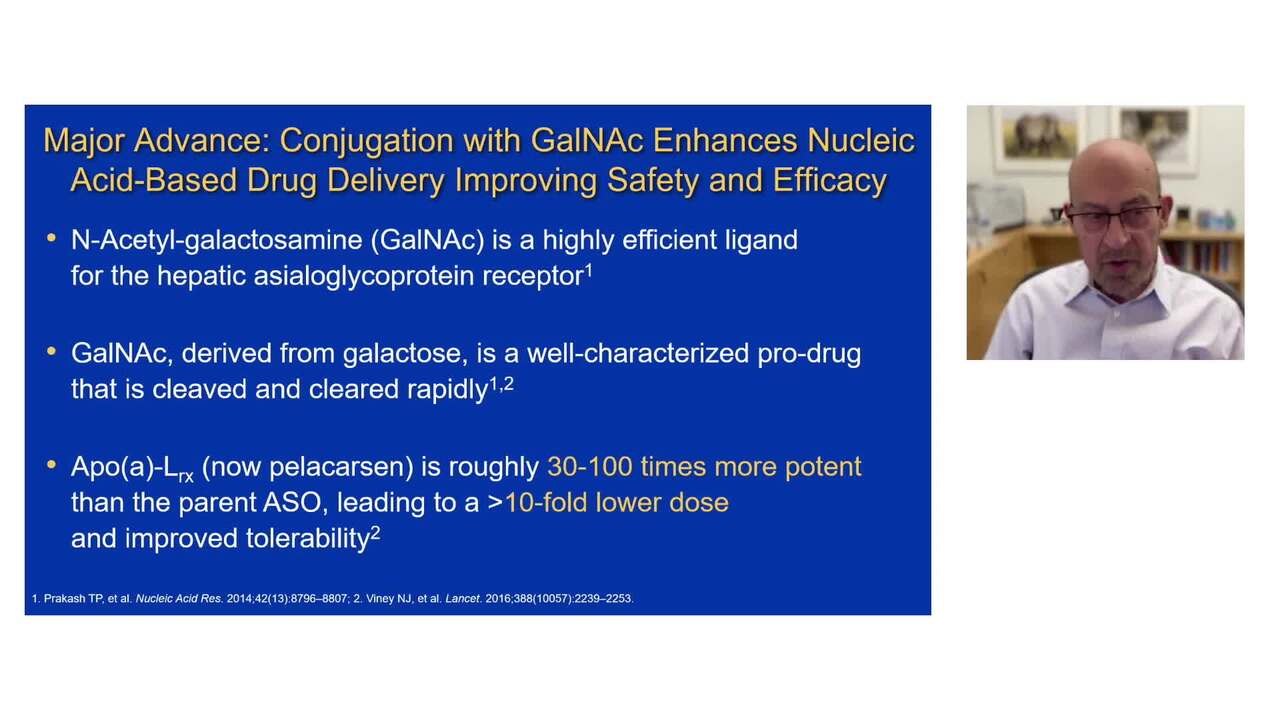
What is new regarding lipoprotein(a)
31 August 2025 Core evidence: Foundational studies and guideline-level recommendations
Lipoprotein(a): current role and future perspectives in cardiovascular medicine
Webinar
Lipoprotein(a): current role and future perspectives in cardiovascular medicine
31 October 2025 Track overview: Broad introduction to Lp(a) in clinical practice.

CLINICAL DECISION 01 - CAUSAL EVIDENCE AND POPULATION RISK: Establishing Lp(a) as an independent driver of cardiovascular events.

This section addresses the epidemiological and clinical basis for Lp(a) as a causal risk factor, distinct from traditional lipid parameters. It covers the evidence linking elevated Lp(a) concentrations to ASCVD onset, residual risk in patients already receiving guideline-directed lipid-lowering therapy, and its relevance across both high-risk and broader population settings. Unresolved questions and current controversies in the field are also examined.
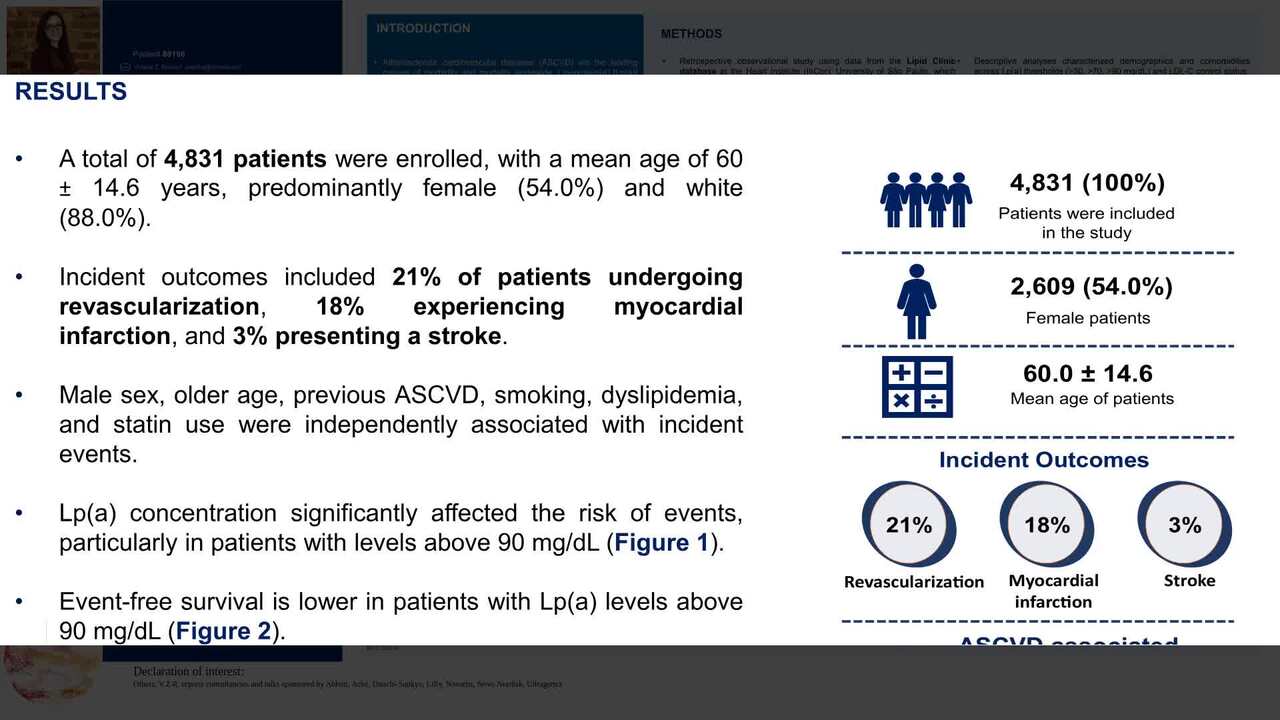
Impact of lipoprotein(a) concentrations on atherosclerotic cardiovascular disease onset: a survival analysis
Congress Presentation
Impact of lipoprotein(a) concentrations on atherosclerotic cardiovascular disease onset: a survival analysis
29 August 2025 Core evidence: Foundational studies and guideline-level recommendations
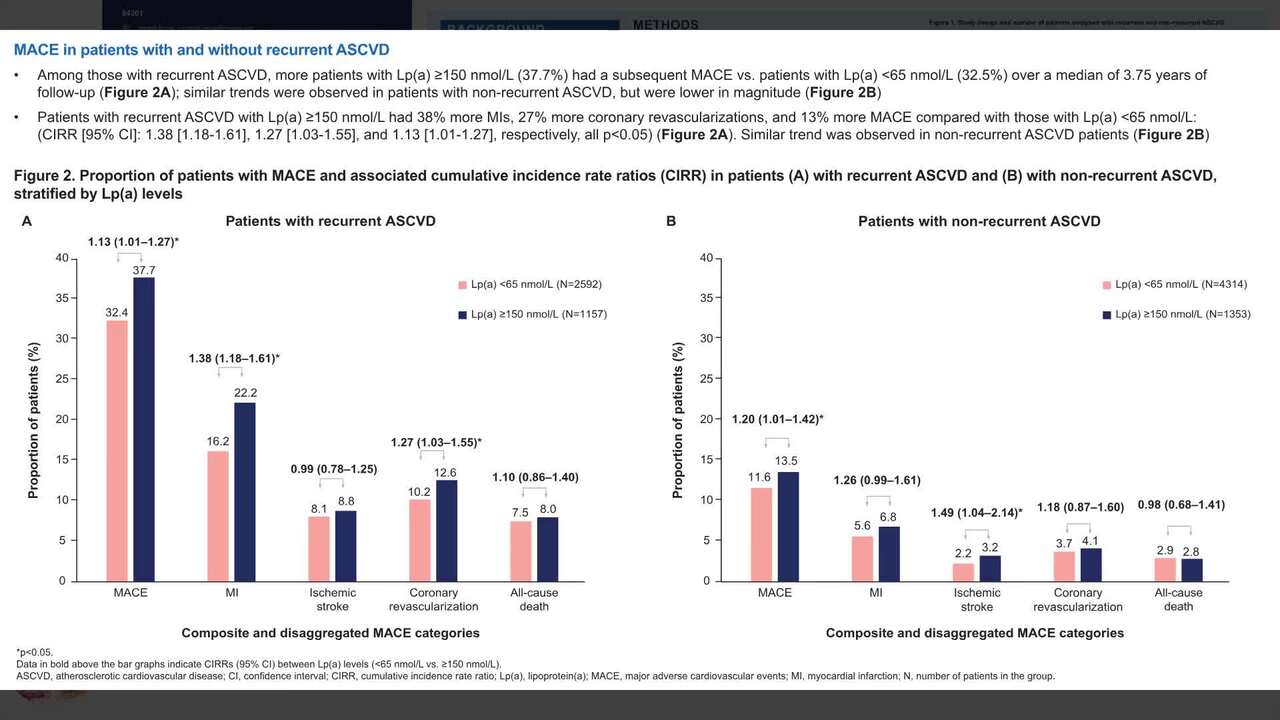
Association of elevated lipoprotein(a) with future major adverse cardiovascular events in recurrent ASCVD patients: analysis of a large US electronic health record database
Congress Presentation
Association of elevated lipoprotein(a) with future major adverse cardiovascular events in recurrent ASCVD patients: analysis of a large US electronic health record database
30 August 2025 Extended learning: Detailed analysis for clinical application
Incident CHD, residual risk and traditional cardiovascular risk factors in the community: role of lipid-inflammatory axis
Congress Presentation
Incident CHD, residual risk and traditional cardiovascular risk factors in the community: role of lipid-inflammatory axis
1 September 2025 Extended learning: Detailed analysis for clinical application
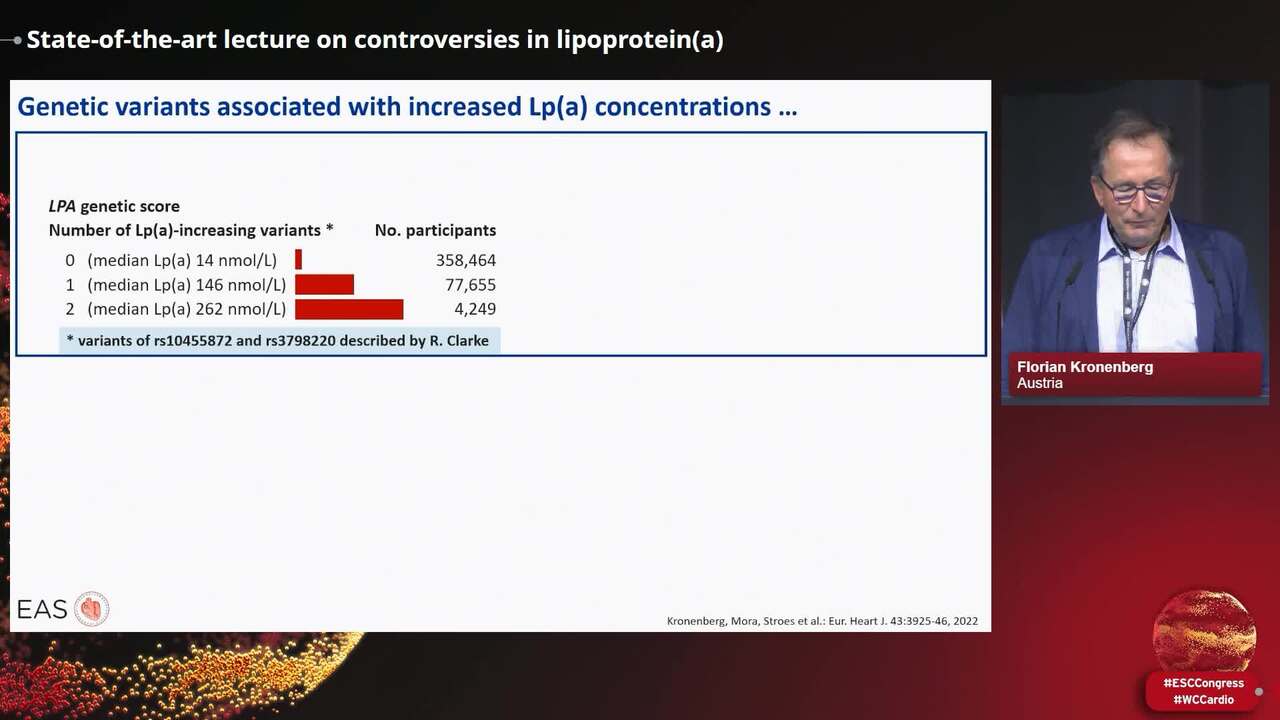
State-of-the-art lecture on controversies in lipoprotein(a)
Congress Presentation
State-of-the-art lecture on controversies in lipoprotein(a)
31 August 2025 Extended learning: Detailed analysis for clinical application

CLINICAL DECISION 02 - Measurement, Variability and Risk Interpretation: Reading Lp(a) results with clinical precision

Lp(a) measurement is not straightforward. This section examines the challenges of timing, assay variability, and the prognostic interaction between Lp(a) and other markers including hsCRP and HDL-C. It builds the analytical framework needed to interpret a patient's Lp(a) result in the context of their overall cardiovascular risk profile.
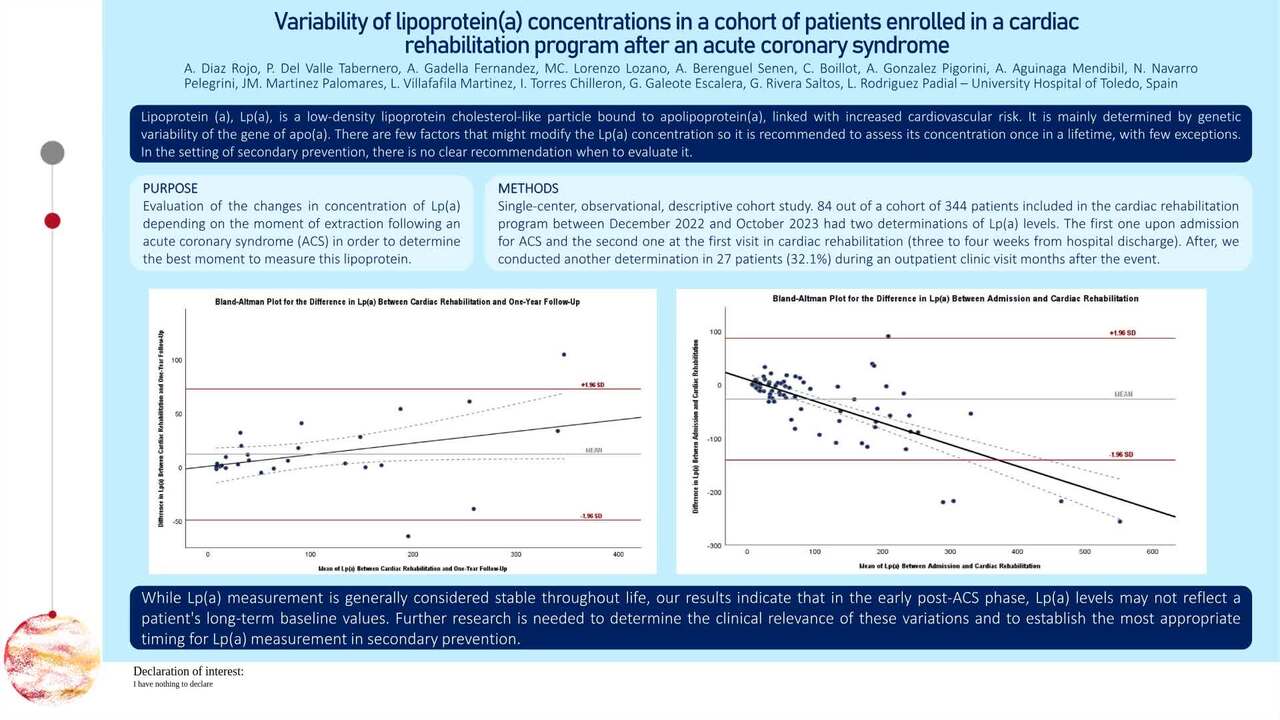
Variability of lipoprotein(a) concentrations in a cohort of patients enrolled in a cardiac rehabilitation program after an acute coronary syndrome
Congress Presentation
Variability of lipoprotein(a) concentrations in a cohort of patients enrolled in a cardiac rehabilitation program after an acute coronary syndrome
31 August 2025 Core evidence: Foundational studies and guideline-level recommendations
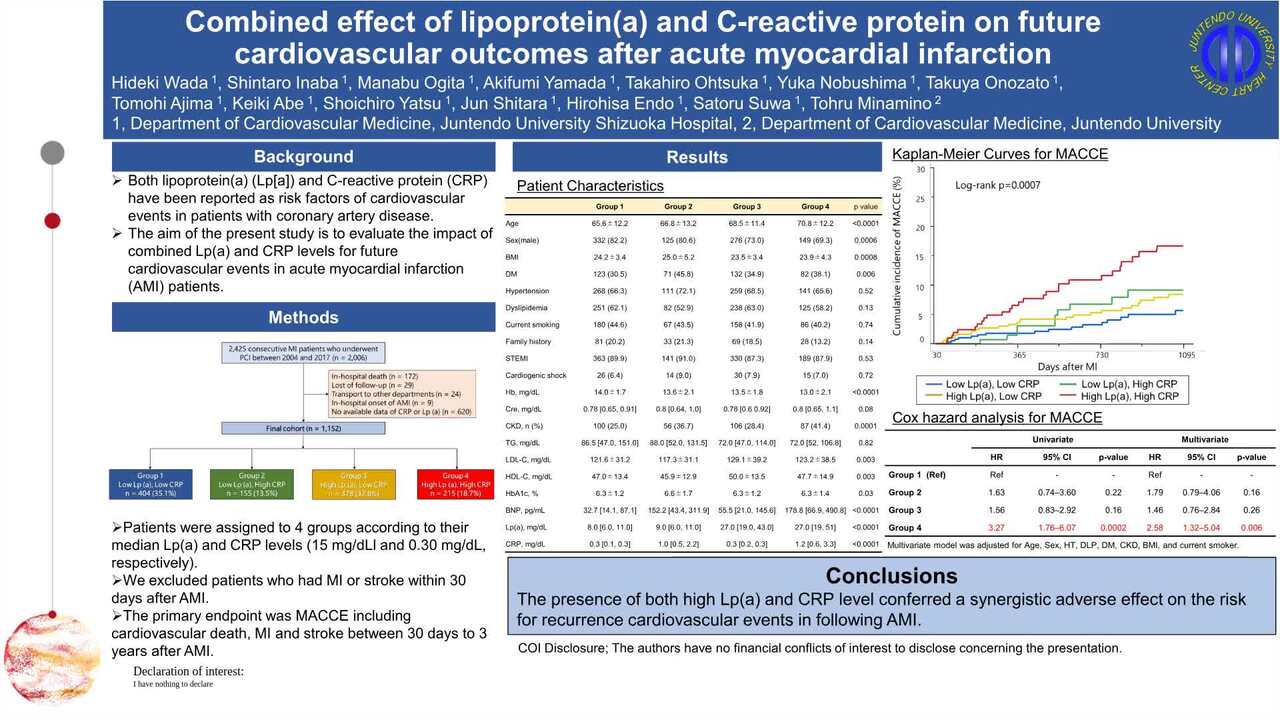
Combined effect of lipoprotein(a) and C-reactive protein on future cardiovascular outcomes after acute myocardial infarction
Congress Presentation
Combined effect of lipoprotein(a) and C-reactive protein on future cardiovascular outcomes after acute myocardial infarction
29 August 2025 Core evidence: Foundational studies and guideline-level recommendations
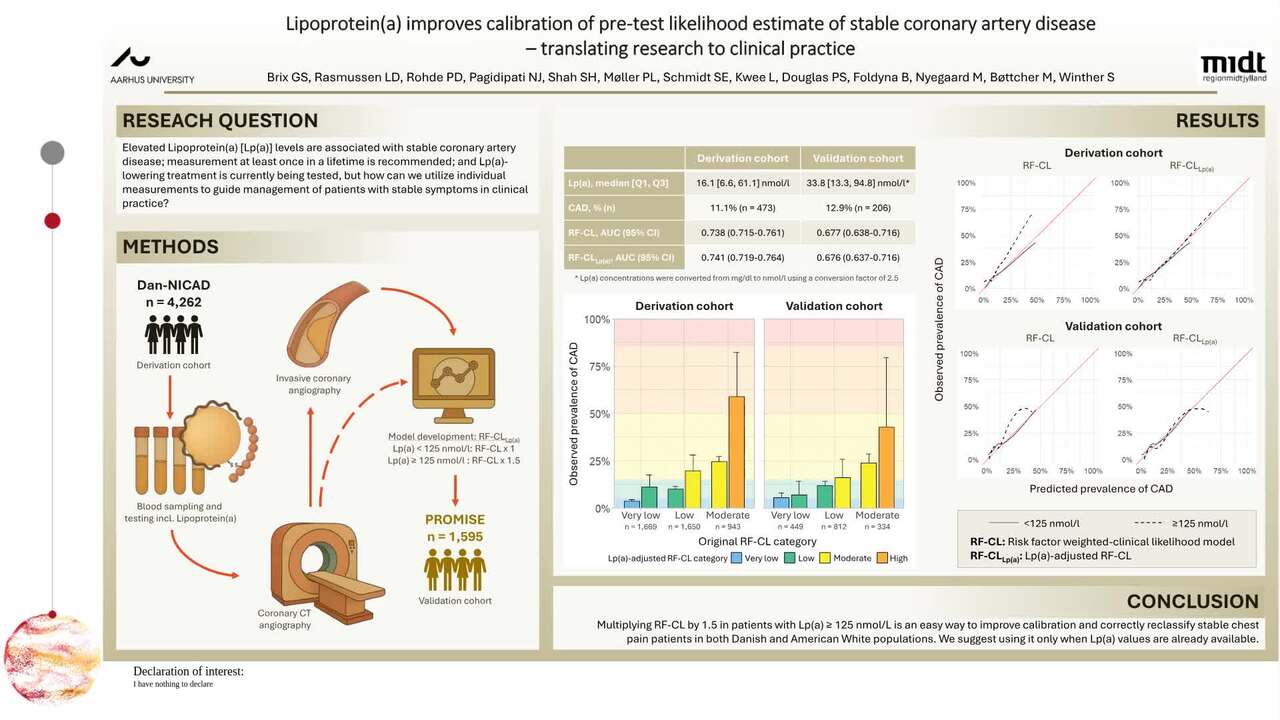
Lipoprotein(a) measurements identify patients with elevated likelihood of obstructive coronary artery disease despite very low or low clinical likelihood
Congress Presentation
Lipoprotein(a) measurements identify patients with elevated likelihood of obstructive coronary artery disease despite very low or low clinical likelihood
30 August 2025 Extended learning: Detailed analysis for clinical application
Residual atherosclerotic risk in older patients with ASCVD: where hsCRP meets Lp(a)
Congress Presentation
Residual atherosclerotic risk in older patients with ASCVD: where hsCRP meets Lp(a)
30 August 2025 Extended learning: Detailed analysis for clinical application
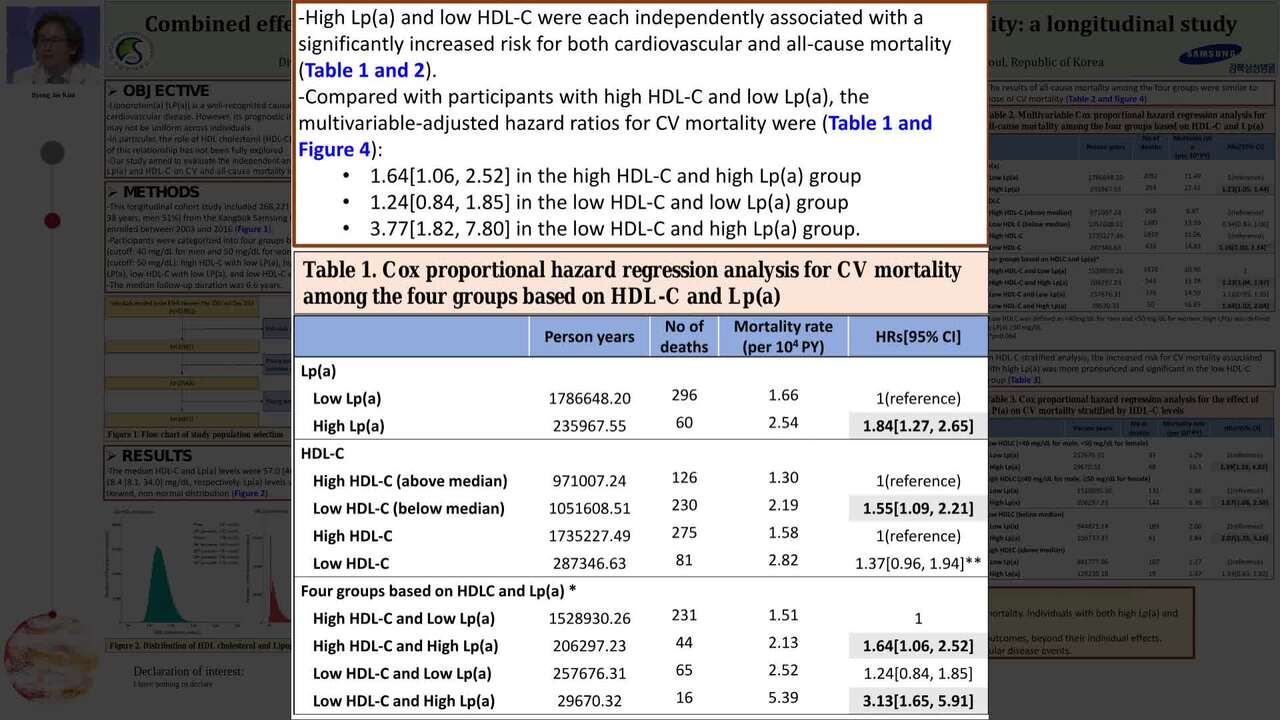
Combined effects of lipoprotein(a) and HDL cholesterol on cardiovascular mortality: a longitudinal study
Congress Presentation
Combined effects of lipoprotein(a) and HDL cholesterol on cardiovascular mortality: a longitudinal study
29 August 2025 Extended learning: Detailed analysis for clinical application
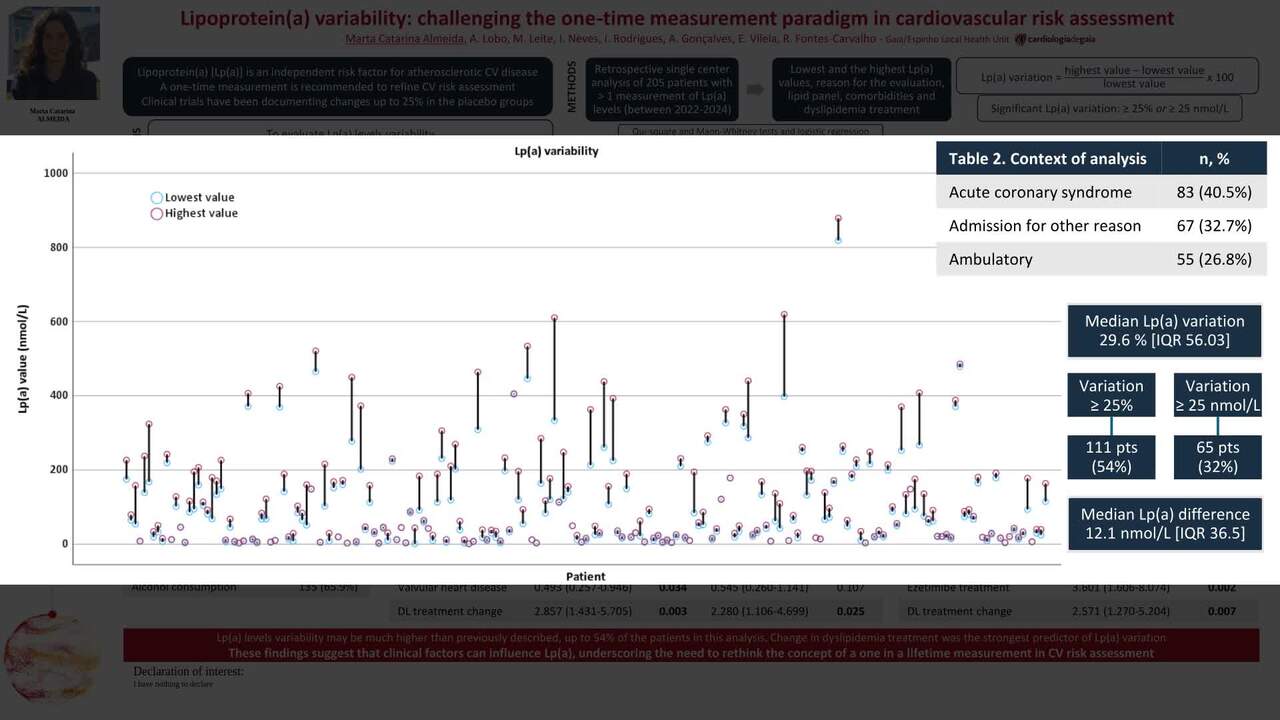
Lipoprotein(a) variability: challenging the one-time measurement paradigm in cardiovascular risk assessment
Congress Presentation
Lipoprotein(a) variability: challenging the one-time measurement paradigm in cardiovascular risk assessment
31 August 2025 Core evidence: Foundational studies and guideline-level recommendations

CLINICAL DECISION 03 - Testing Indications and Cascade Strategies: Identifying who warrants Lp(a) measurement in your practice

Based on the 2025 ESC/EAS focused update, this section translates guideline recommendations into clinical decision-making. It covers the rationale for once-in-a-lifetime measurement, the populations where testing changes risk stratification, and the evidence supporting family-based cascade screening given the heritability of elevated Lp(a).
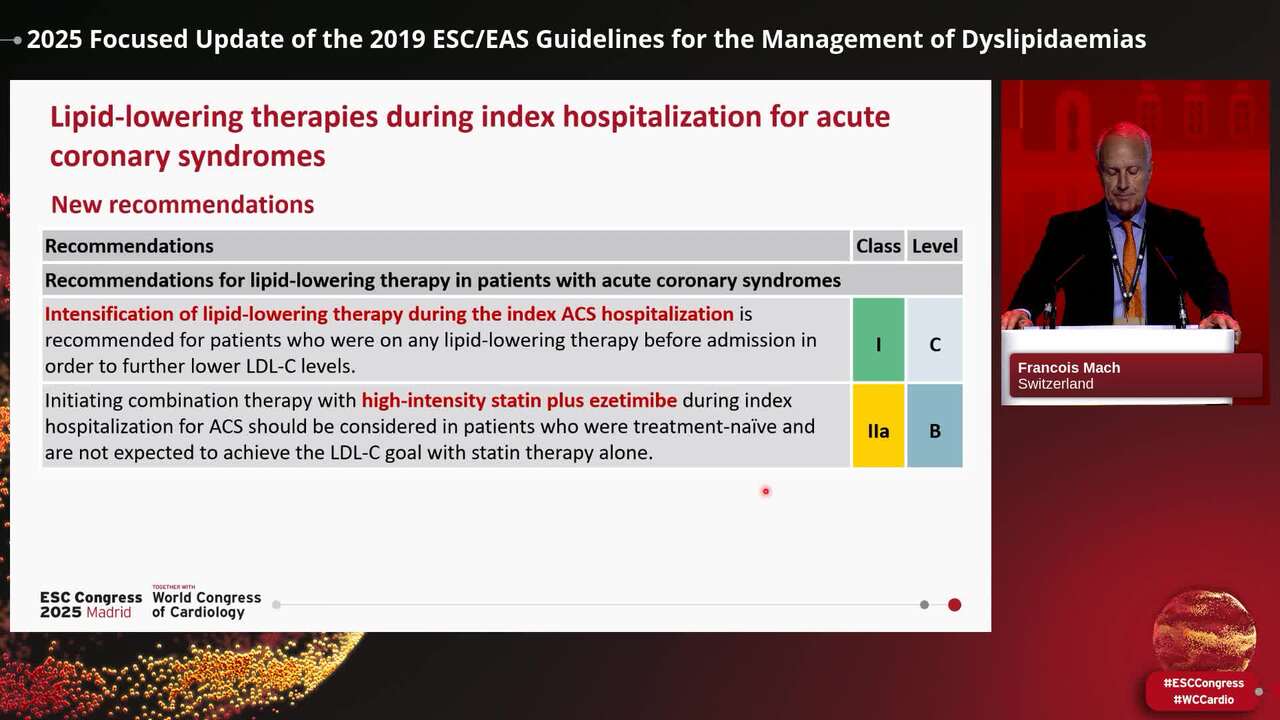
2025 Focused Update of the 2019 ESC/EAS Guidelines for the Management of Dyslipidaemias
Congress Presentation
2025 Focused Update of the 2019 ESC/EAS Guidelines for the Management of Dyslipidaemias
29 August 2025 Core evidence: Foundational studies and guideline-level recommendations
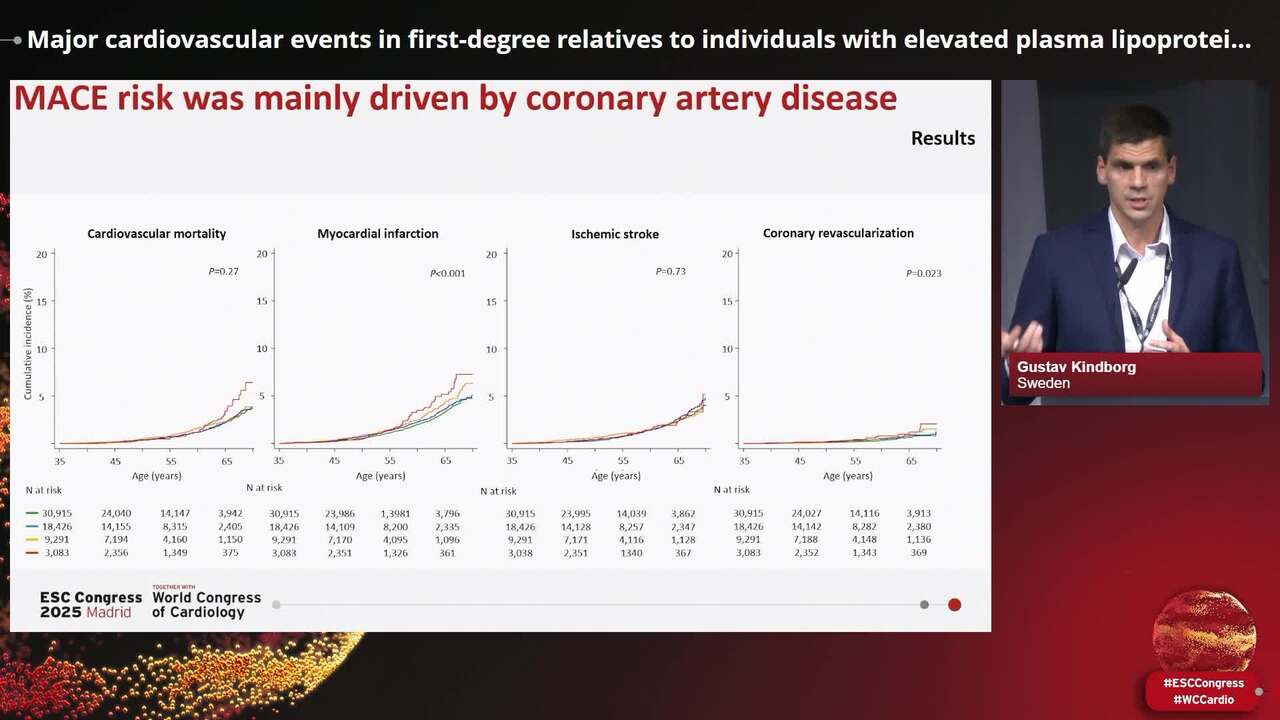
Major cardiovascular events in first-degree relatives to individuals with elevated plasma lipoprotein(a) a registry-based cohort study
Congress Presentation
Major cardiovascular events in first-degree relatives to individuals with elevated plasma lipoprotein(a) a registry-based cohort study
31 August 2025 Extended learning: Detailed analysis for clinical application
LipoaScreen – cascade screening for lipoprotein(a)
Congress Presentation
LipoaScreen – cascade screening for lipoprotein(a)
1 September 2025 Core evidence: Foundational studies and guideline-level recommendations
Lp(a): case discussion & current testing landscape
Congress Presentation
Lp(a): case discussion & current testing landscape
29 August 2025 Extended learning: Detailed analysis for clinical application

CLINICAL DECISION 04 - Current Management in Elevated Lp(a): What evidence-based action looks like today

Targeted Lp(a)-lowering agents are not yet standard of care, but clinical decisions cannot wait. This section examines how elevated Lp(a) modifies response to intensive LDL-C lowering in ACS, the modifiable factors associated with absence of atherosclerosis progression despite high Lp(a), and the evidence for Lp(a) reduction with PCSK9 inhibition using alirocumab.
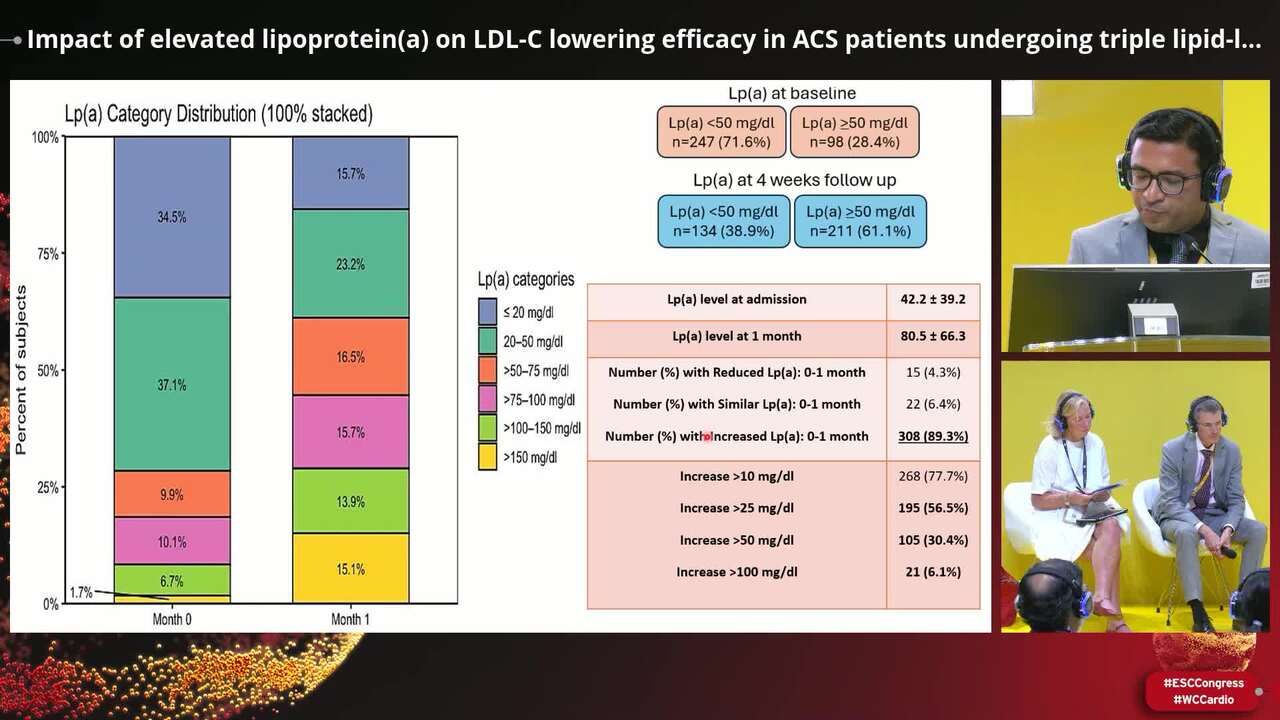
Impact of elevated lipoprotein(a) on LDL-C lowering efficacy in ACS patients undergoing triple lipid-lowering therapy: insights from LAI-REACT-LP(a) sub-study
Congress Presentation
Impact of elevated lipoprotein(a) on LDL-C lowering efficacy in ACS patients undergoing triple lipid-lowering therapy: insights from LAI-REACT-LP(a) sub-study
31 August 2025 Core evidence: Foundational studies and guideline-level recommendations
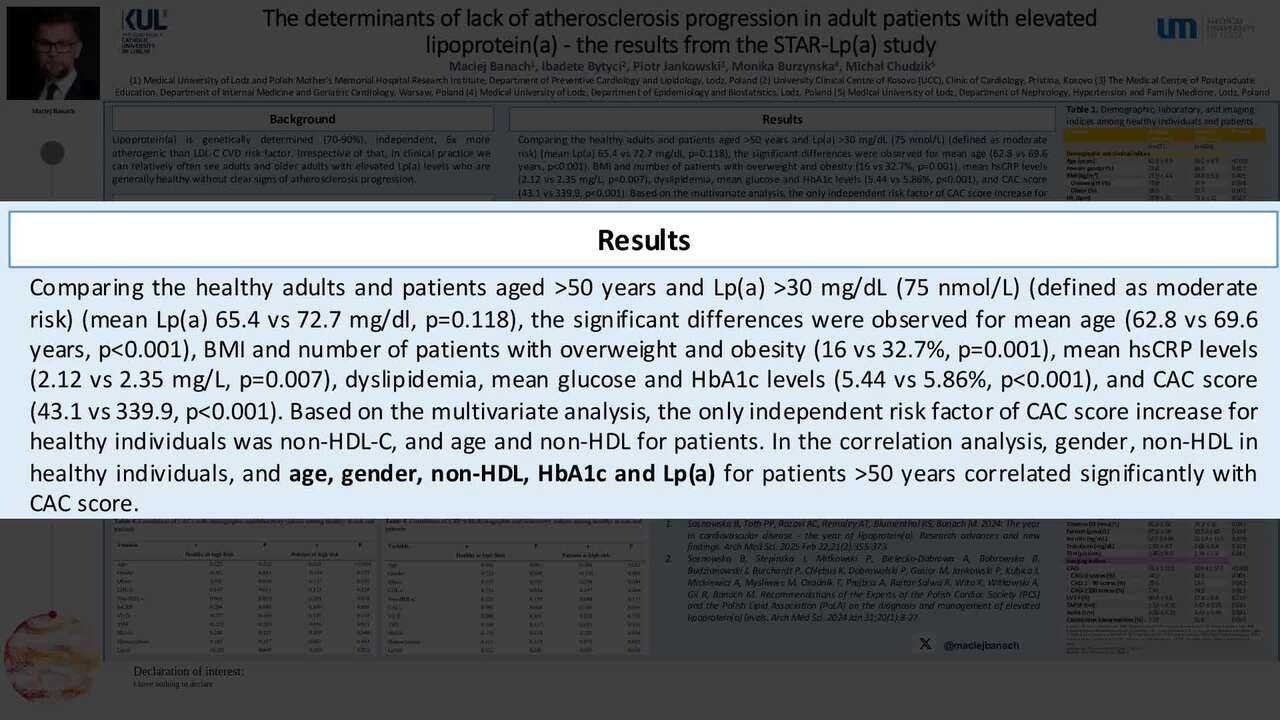
The determinants of lack of atherosclerosis progression in adult patients with elevated lipoprotein(a). The results from the STAR-Lp(a) study.
Congress Presentation
The determinants of lack of atherosclerosis progression in adult patients with elevated lipoprotein(a). The results from the STAR-Lp(a) study.
31 August 2025 Core evidence: Foundational studies and guideline-level recommendations
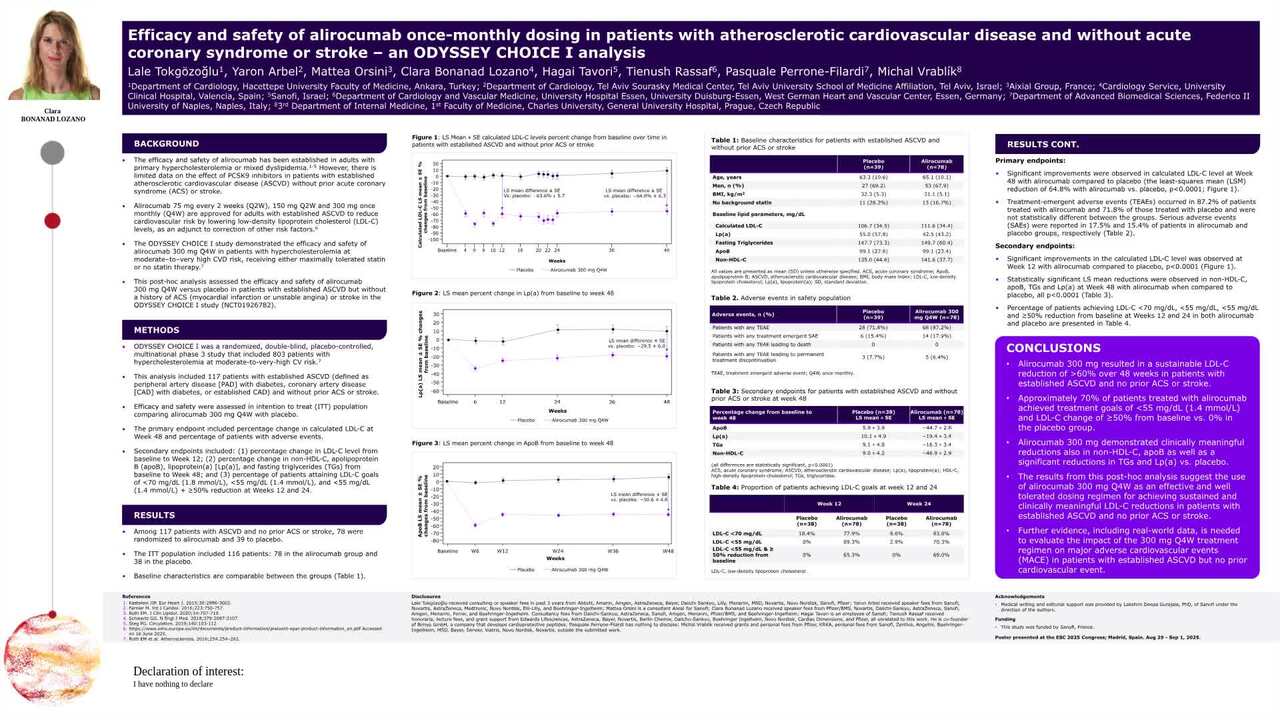
Efficacy and safety of Alirocumab once-monthly dosing in patients with atherosclerotic cardiovascular disease and without acute coronary syndrome or stroke; an ODYSSEY CHOICE I analysis
Congress Presentation
Efficacy and safety of Alirocumab once-monthly dosing in patients with atherosclerotic cardiovascular disease and without acute coronary syndrome or stroke; an ODYSSEY CHOICE I analysis
1 September 2025 Extended learning: Detailed analysis for clinical application

CLINICAL DECISION 05 - Emerging Therapies and the Road Ahead: Phase 3 data and its implications for practice

RNA-based therapies targeting Lp(a) are entering late-stage clinical development. This section presents the current evidence from the Lp(a)FRONTIERS APHERESIS trial with pelacarsen and considers what these results mean for patient selection, treatment sequencing, and the future management of Lp(a)-driven cardiovascular risk.
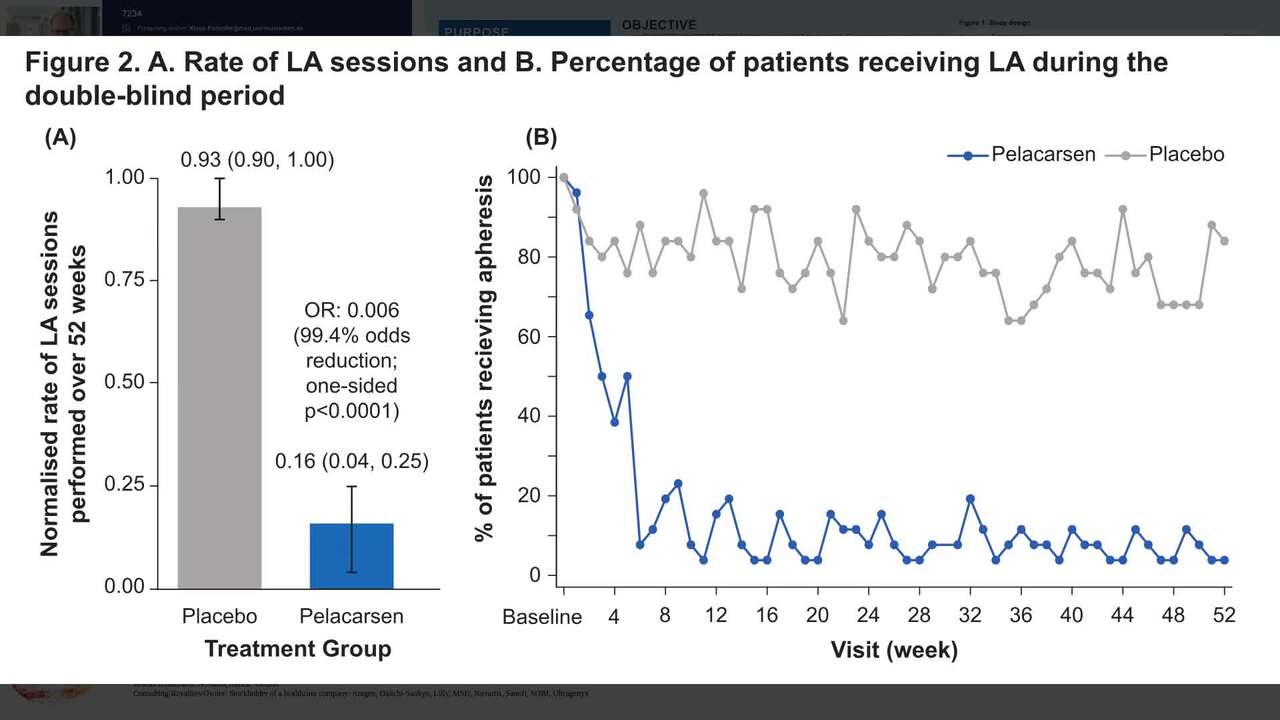
Pelacarsen reduces the need for lipoprotein apheresis in patients with elevated lipoprotein(a) and cardiovascular disease: The Phase 3 Lp(a)FRONTIERS APHERESIS trial
Congress Presentation
Pelacarsen reduces the need for lipoprotein apheresis in patients with elevated lipoprotein(a) and cardiovascular disease: The Phase 3 Lp(a)FRONTIERS APHERESIS trial
29 August 2025 Advanced reading: Specialist methodology and emerging data

CLINICAL DECISION 06 - Lp(a) and Valvular Disease - Expanding the clinical picture beyond ASCVD
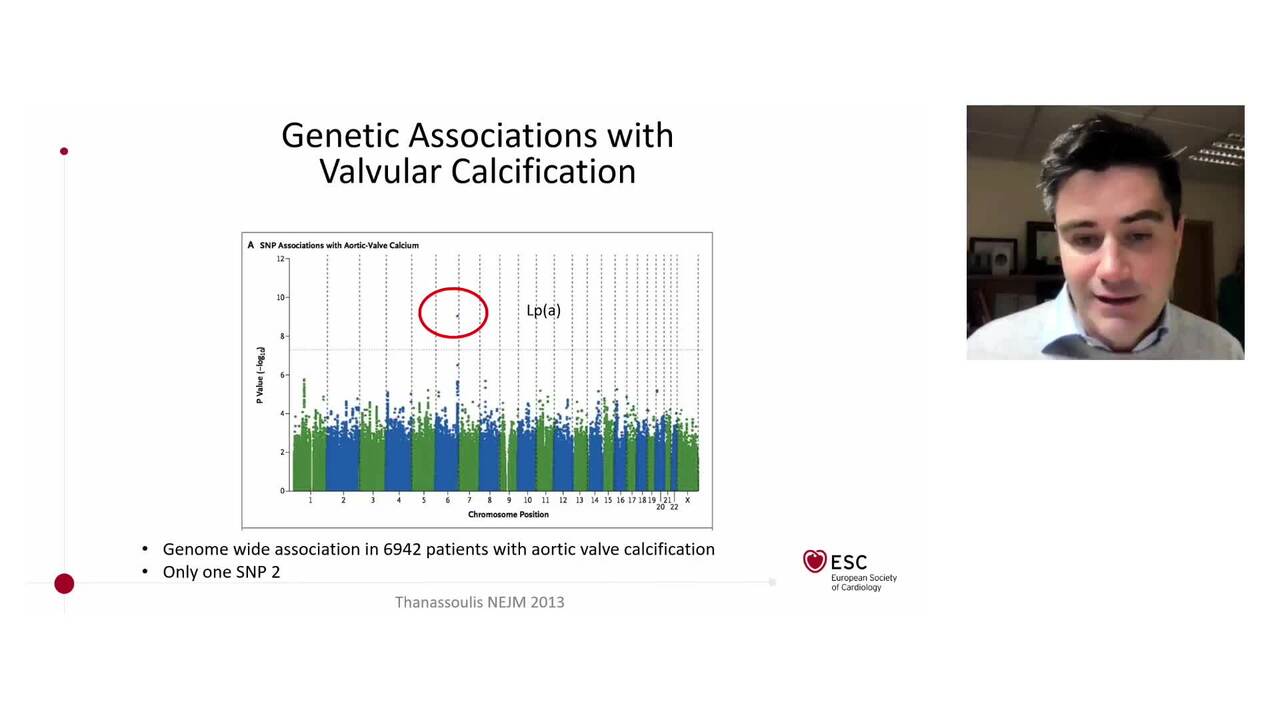
Elevated Lp(a) has implications beyond atherosclerotic cardiovascular disease. This clinical decision examines the relationship between Lp(a) and valvular pathology, with a focus on aortic valve stenosis, imaging of coronary and valvular disease, and the therapeutic implications of these findings for clinical practice.
Lipoprotein(a): implications for atherosclerotic cardiovascular disease and calcific aortic stenosis

Webinar
Lipoprotein(a): implications for atherosclerotic cardiovascular disease and calcific aortic stenosis
30 January 2026 Extended learning: Expanding the clinical picture
Episode 02: Lp(a) and aortic valve stenosis - The truth about climate change and heart disease
ESC TV Today
Episode 02: Lp(a) and aortic valve stenosis - The truth about climate change and heart disease
5 February 2026 Extended learning: Expanding the clinical picture

ESC 365 is supported by