Efficacy and workload implications of the Triage-HF™ algorithm in a nurse- and allied professional-led heart failure care pathway
European Journal of Cardiovascular Nursing


Abstract
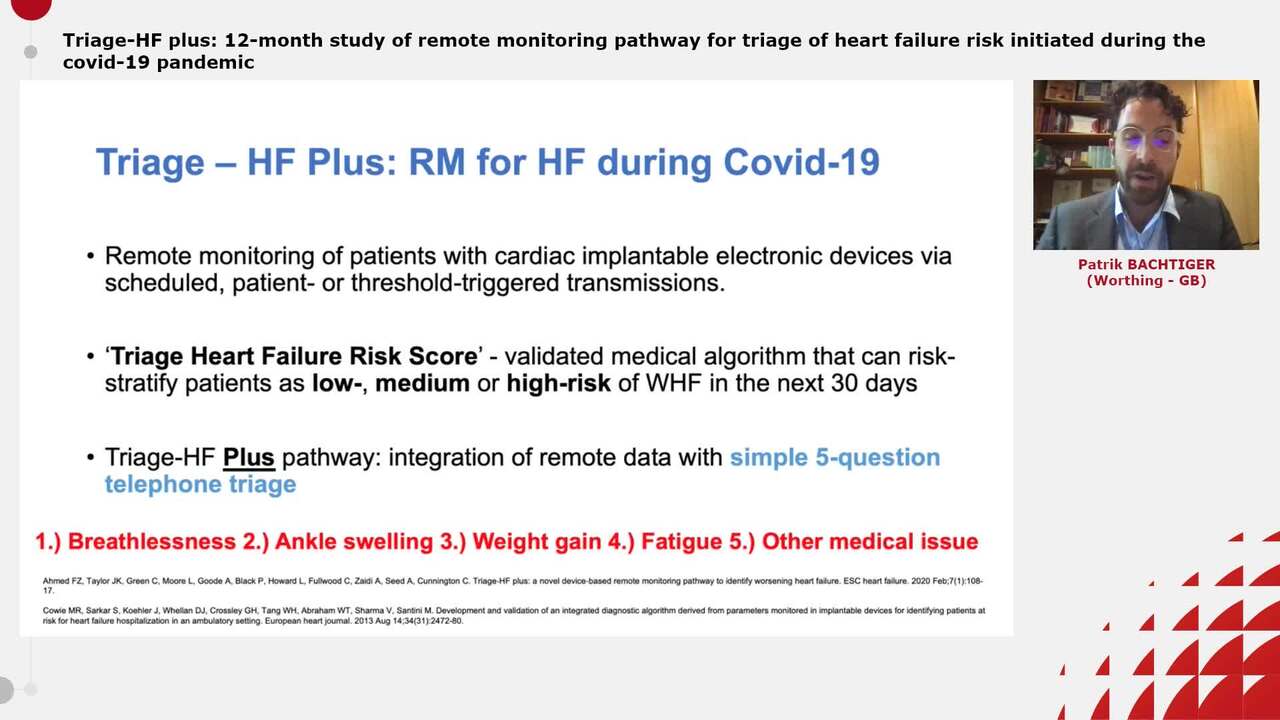
This study aims to evaluate the diagnostic accuracy and operational workload of the Triage-HF™ algorithm when integrated into a structured heart failure (HF) clinic workflow in real-world clinical practice.
We conducted a single-centre, prospective, real-world cohort study in a tertiary HF centre. Consecutive adult patients with HF carrying a Triage-HF™-enabled cardiac implantable electronic device were followed within an alert-guided care pathway between January 2023 and August 2025. High-risk Heart Failure Risk Score alerts were considered actionable.
A total of 180 patients were included (230 patient-years follow-up, mean age 67.5 years, 77.2% male, 48.9% ischaemic cardiomyopathy). Overall, 102 high-risk alerts occurred: 64 true positives (58 HF-related and 6 non-HF but clinically meaningful), 27 false positives, and 20 false negatives. Sensitivity was 82% (95% confidence interval (CI) 70–92%), specificity 91% (87–94%), positive predictive value 72% (60–81%), and negative predictive value 93% (90–96%). The average alert rate was 0.44 per patient-year, with an unexplained alert rate of 0.10 per patient-year. Most true-positive alerts (80%) were managed ambulatory, while 19% resulted in hospitalization. Median time to first intervention was 2 days [interquartile range (IQR) 1–4]. All alerts were driven by multisensor input, most commonly thoracic impedance combined with patient activity. The total estimated workload amounted to 70.3 h, corresponding to 306 h per 1000 patient-years (∼0.20 full-time equivalent).
Within a standardized HF care pathway, Triage-HF™ demonstrated good sensitivity and high specificity and negative predictive value while imposing a modest staffing burden. These findings support the feasibility of integrating Triage-HF™ into routine, proactive HF management.
Contributors

Bert A C Zwaenepoel
Author
Ugur Aslan
Author
Bas Kirchhof
Author
Stephan Gelderblom
Author
Anne De Jong van der Linden
Author
Lieselot van Erven
Author
J Wouter Jukema
Author

You may be interested in