Access to cardiac implantable electronic device therapy in the European Society of Cardiology EuroAsia region: a comparative analysis of implantation activity, infrastructure, and health financing
European Heart Journal - Quality of Care and Clinical Outcomes


Abstract
Access to cardiac implantable electronic device (CIED) therapy varies substantially across Europe, yet data from the European Society of Cardiology (ESC) EuroAsia region remain limited. We aimed to compare implantation activity of pacemakers (PMs), implantable cardioverter-defibrillators (ICDs), and cardiac resynchronization therapy (CRT) devices across ESC EuroAsia Task Force (TF) countries and to examine how infrastructure, workforce capacity, and health financing patterns relate to device uptake.
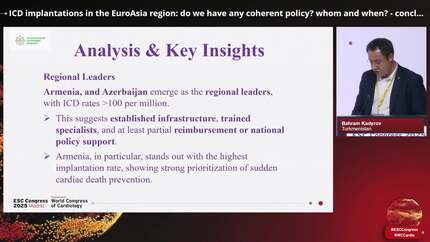
National-level aggregated data were collected in 2025 through a standardized ESC EuroAsia TF survey and contextualized using European Heart Rhythm Association Atlas indicators and World Bank/World Health Organization Health Expenditure Data. Implantation rates per million population were compared across Armenia, Azerbaijan, Georgia, Kazakhstan, Kyrgyzstan, Turkmenistan, and Uzbekistan. Pacemaker implantation showed moderate variability (21–333 per million), whereas ICD (0.1–172 per million) and particularly CRT (1–135 per million) implantation demonstrated pronounced disparities. Countries with higher density of implanting centres and greater electrophysiology workforce availability—most notably Georgia—had substantially higher per capita ICD and CRT implantation rates. Exploratory analyses suggested moderate positive correlations between national health expenditure (%gross domestic product) and ICD and CRT implantation rates, whereas financing structure (out-of-pocket vs. government share) showed no consistent association.
Cardiac implantable electronic device implantation activity in the ESC EuroAsia region follows a clear complexity gradient (PM > ICD > CRT), indicating that access to advanced device therapy is primarily determined by system capacity rather than guideline awareness alone. Strengthening predictable reimbursement pathways, structured referral networks, workforce development, and national registries may reduce inequities and narrow the evidence–practice gap in sudden cardiac death prevention and heart failure management.
Contributors

Ulvi Mirzoyev
Author
Bahram Kadyrov
Author

Erkin Mirrakhimov
Author
Kyrgyz State Medical Academy 2. National Center of Cardiology and Internal Medicine Bishkek , Kyrgyzstan
Cecilia Linde
Author
Thomas Lüscher
Author


You may be interested in