Ischaemic strokes as an initial manifestation of eosinophilic granulomatosis with polyangiitis with eosinophilic myocarditis: a case report
European Heart Journal - Case Reports


Abstract
Eosinophilic myocarditis (EM) is a rare form of myocarditis which may be caused by eosinophilic granulomatosis with polyangiitis (EGPA), a rare disease which frequently affects the heart. The case of a young woman with a rare initial manifestation of EGPA as a cause of EM is reported.
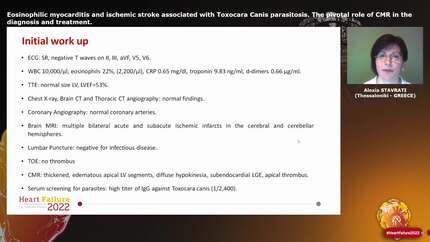
A 39-year-old woman presented with diffuse neurological symptoms. She was diagnosed with multiple, bilateral, simultaneous ischaemic strokes. No obvious stroke origin was detectable. However, significantly elevated troponin levels and eosinophilia were noted. Cardiac computed tomography ruled out coronary artery disease. Cardiac magnetic resonance imaging (CMR) proved myocarditis. However, endomyocardial biopsy, did not confirm EM. Nevertheless, EGPA with primary cardiac involvement was diagnosed due to eosinophilia, history of asthma, evidence of pANCA and matching CMR findings. Treatment with benralizumab was initiated. Follow-up CMR after about 6 months showed a significant reduction in inflammatory activity.
Eosinophilic granulomatosis with polyangiitis and EM associated with EGPA are rare but in patients with EGPA, cardiac involvement is frequent. Ischaemic strokes as an initial manifestation of EGPA is particularly rare. Other potential causes of stroke were ruled out. In the presence of CMR-proven myocarditis associated with peripheral eosinophilia, EM may be diagnosed without histological confirmation. Endomyocardial biopsy may be false negative in a relevant number of cases but CMR is usually abnormal. However, there are no specific CMR findings that occur exclusively in EM.
Contributors

Lukas Ley
Author
Christian Kirsch
Author
David Oxborough
Author
Ahsan Aftab Khan
Author
Rita Pavasini
Author
Deepti Ranganathan
Author
You may be interested in