Essential antiarrhythmic drug accessibility worldwide: a multi-survey study and comprehensive evaluation of access and supply challenges
EP Europace Journal


Abstract
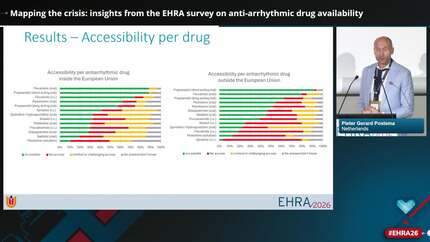
Antiarrhythmic drugs (AADs) are essential for preventing symptoms, morbidity, and mortality associated with cardiac arrhythmias. However, concerns are increasing about their accessibility. We aimed to assess insights into current access to AADs.
Online surveys were distributed to members of the European Heart Rhythm Association, the Association for European Paediatric and Congenital Cardiology, the European Reference Network GUARD-Heart, and national heart rhythm societies. Responses were obtained from 558 respondents across 80 countries. Among countries included in the main analysis (≥5 respondents; 16 countries within and 7 outside the European Union,
Physicians worldwide frequently encounter problems accessing guideline-recommended antiarrhythmic drugs for their patients, which putatively impacts their patients’ quality of life and life expectancy. This highlights systemic vulnerabilities that extend across national and institutional boundaries, urging close collaboration among clinicians, policymakers, manufacturers, and institutions to guarantee timely and equitable treatment for all patients.
Contributors


Niels D Reijnhout
Author
Federico Ballacci
Author
Evert A Manders
Author
Wiert F Hoeksema
Author
Mauro Toniolo
Author

Diego Penela
Author


Deirdre A Lane
Author
University of Liverpool Liverpool , United Kingdom of Great Britain & Northern Ireland
Ruben Casado-Arroyo
Author

Nico A Blom
Author

Carla E M Hollak
Author

You may be interested in