Biventricular arrhythmogenic cardiomyopathy due to a PKP2 mutation with severe heart failure and multifocal thromboembolism as the clinically apparent presentation: a case report

European Heart Journal - Case Reports

27 August 2026
Organised by: Logo
ESC Journals CARDIOVASCULAR DISEASE IN SPECIFIC POPULATIONS HEART FAILURE Chronic Heart Failure IMAGING Cardiac Magnetic Resonance (CMR) Cross-Modality and Multi-Modality Imaging Topics Echocardiography VALVULAR, MYOCARDIAL, PERICARDIAL, PULMONARY, CONGENITAL HEART DISEASE Myocardial Disease

Abstract

AbstractBackground

Arrhythmogenic cardiomyopathy (ACM) is a genetic myocardial disease classically characterized by ventricular arrhythmias and right ventricular involvement. Biventricular variants involving PKP2 mutations are increasingly recognized but rarely present primarily as severe heart failure and multi-focal thromboembolism.

Case summary

A 22-year-old woman presented with progressive exertional dyspnoea and severe biventricular dysfunction [left ventricular systolic dysfunction (LVEF) 20%]. The clinical course was complicated by right subclavian vein thrombosis and an acute cerebellar infarction. Cardiac magnetic resonance imaging demonstrated biventricular involvement with a non-ischaemic pattern of myocardial fibrosis. Genetic testing identified a pathogenic heterozygous PKP2 variant, which, integrated with the phenotype, established the diagnosis of ACM. Serial electrocardiographic assessment revealed a high burden of multifocal premature ventricular complexes, which persisted despite catheter ablation and increased during ambulation, indicating ongoing electrical instability. The patient received optimized guideline-directed medical therapy and rivaroxaban. At follow-up, she demonstrated reverse remodelling with an improved LVEF of 31%.

Discussion

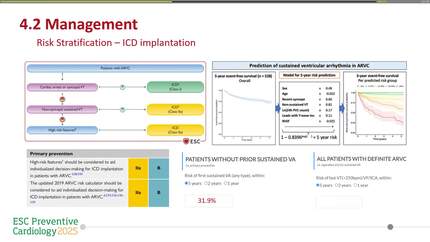
This case expands the clinical spectrum of PKP2-associated ACM, emphasizing that severe heart failure and thromboembolism can dominate the clinically apparent presentation. While significant arrhythmias, including non-sustained ventricular tachycardia and a high premature ventricular contraction (PVC) burden, are classic hallmarks of the disease, in this case, they did not prompt initial medical attention and were instead documented on later surveillance. Although electrical remodelling occurs early, it may remain clinically concealed until unmasked by progressive structural damage. Early integration of multimodality imaging and genetic testing is essential for accurate diagnosis and risk stratification. Implantable cardioverter-defibrillator implantation was planned for primary prevention of sudden cardiac death.