Preliminary results of a single, easy-to-use device for multimodal detection of intervals associated with heart failure decompensation
European Heart Journal - Digital Health


Abstract
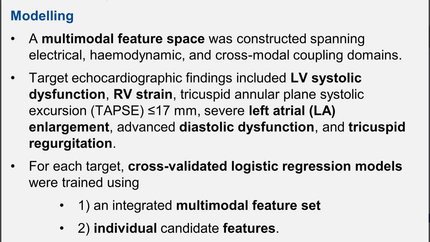
The use of cardiac signal-recording tools to monitor prognostic and diagnostic parameters in heart failure (HF) is an emerging field, constrained by usability and a low signal-to-noise environment. We evaluated a compact, user-friendly prototype for simultaneous acquisition of phonocardiography, photoplethysmography, electrocardiography, and subsequent processing to determine this strategy’s usefulness in identifying parameters related to HF decompensation.
We conducted a single-centre prospective study of 41 hospitalized patients; 36 included in the analysis. Autonomous recordings of phonocardiography, electrocardiography, and pulse-wave photoplethysmography were obtained. Signal processing employed a new supervised iterative filtering pipeline based on detection of coupled energy peaks, together with an independent analysis of the pulse-wave plethysmogram, enabling extraction of clinically relevant intervals even when one modality was of insufficient quality. In the cohort admitted with decompensated HF, measures at discharge showed shortening of electromechanical coupling time (0.148 ± 0.051 vs. 0.108 ± 0.039 s;
This study presents initial evidence that a compact, easy-to-use device permits autonomous acquisition of diagnostic cardiac signals by non-expert users and that the proposed processing strategy reliably detects clinically relevant intervals in low-signal-to-noise ratio recordings, supporting its potential utility for monitoring patients with HF.
Contributors

David Sánchez-Ortiz
Author
Mercedes Rivas-Lasarte
Author
Alejandro Nistal-Juarez
Author
Luis Blanco-Tapia
Author
Miguel Fribourg
Author
Manuel Gómez-Bueno
Author

Alba Martin-Centellas
Author
Ramón Garrido-González
Author
Martín Santos-González
Author

You may be interested in